Key takeaways
-
You can run a usable Shoppable video Shopify Free setup by sourcing creator UGC, hosting on free platforms (YouTube/TikTok), and embedding with simple on-page CTAs; upgrade when operational friction or scale exceed manual handling.
-
Single-product stores get the fastest ROI by embedding 3–7 short clips on the product page and linking each clip to the product variant or the subscription checkout.
-
Subscription and marketplace sellers should prioritize organization: tag videos by SKU, feed them into collection pages, and use a filter-friendly layout to avoid zero-result searches.
-
Use free hosting for discovery and analytics, but test a small paid shoppable-video app (or Hyper Shoppable Videos) once you need overlays, accurate attribution, or multi-video widgets.
Single-product stores: the cheapest path to shoppable video
Conclusion: If you sell one primary SKU, you can publish shoppable video on your product page today with only creator-supplied clips, a free host, and a lightweight embed strategy that points directly to the variant or checkout.
Why this works: single-product pages are low complexity—there’s no product chooser to confuse the buyer—and every second of attention can be converted to a single add-to-cart action. That removes two common blockers that make shoppable video expensive: mapping clips to the right SKU and managing many overlays.
A 5-step workflow you can run today:
-
Step 1 — Collect clips: Ask customers or creators for vertical 10–30 second clips showing the product in use. Offer a clear brief (lighting, shot, one sentence caption) and a small incentive (discount or free sample). Keep clips short to lower production friction.
-
Step 2 — Host for free: Upload to a free public or unlisted YouTube, TikTok, or Instagram Reel account. Use the post description to include the product permalink and the variant slug.
-
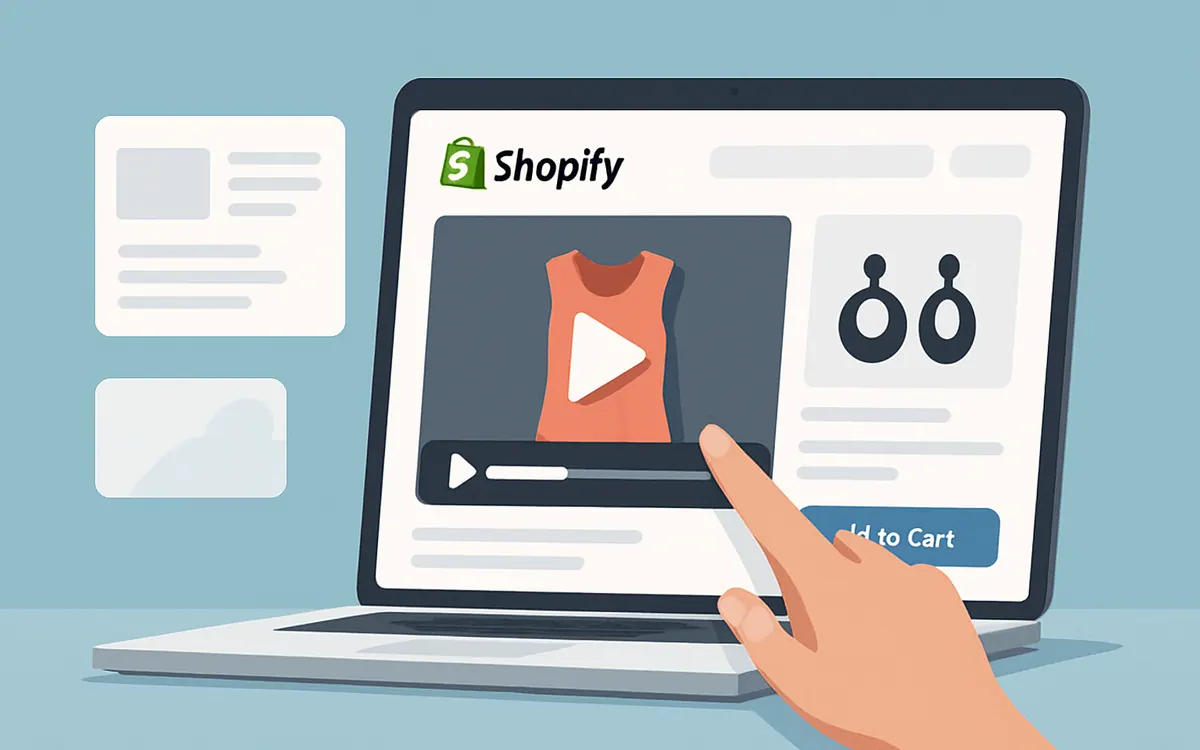
Step 3 — Embed and CTA: Add the platform iframe or embed code to your Shopify product page below the main image, then place a visible labeled button under each embed that links to the product variant or to the one-click checkout. The CTA is the shoppable element; overlays are optional at this stage.
-
Step 4 — Annotate: In the embed caption or in the page copy immediately next to the video, state which variant is shown and provide a timestamp link (for YouTube) or a button that anchors to the buy area.
-
Step 5 — Measure and decide: Track clicks from the button next to the video using UTM parameters. If the video yields a repeatable stream of clicks and you’re spending more than a few hours a week maintaining embeds, evaluate an app like Hyper Shoppable Videos for overlays and attribution.
Trade-offs and thresholds: You get zero software cost and immediate publishing. You lose precise in-video overlays (click-to-purchase spots) and per-video attribution until you adopt a paid app. Use this method when you have under 10 videos and a tight budget; upgrade once manual linking slows you down.
Subscription businesses: workflows for demo, onboarding, and conversion
Conclusion: For subscription products, shallow integrations (video → product page → subscription checkout) are best until you validate which clip types move trial signups; then automate by templating metadata and using a small app to manage recurring-purchase links.
Why subscription stores differ: the buyer journey includes a billing decision and possibly a trial. That changes the CTA you want on video—from add-to-cart to start trial, pick plan, or subscribe. It also raises the bar on messaging: show recurring benefits, frequency, or usage tips rather than single-use glamour shots.
Practical workflow for subscription stores on a budget:
-
Collect short tutorial clips (15–40s) that show ‘‘how to use’’ and ‘‘what changes in four weeks’’. Ask creators to mention recurring benefit plainly.
-
Use the free host of your choice (YouTube or TikTok). In the video description and the embed caption, place a link to the subscription landing page set with the intended plan ID or to a checkout URL that already sets subscription parameters. Shopify subscription apps produce direct checkout links you can paste.
-
Template your embed block: Create one product page section for video where you can swap the iframe and update the CTA link. That lets your store manager test multiple videos without developer time.
-
Automate metadata: Keep a simple spreadsheet listing video ID, host, caption, target plan ID, and UTM. When a clip proves higher-performing, replicate its format across creators.
Decision rule for upgrading: When you have recurring clips (5+) and need in-player hotspots that add the selected subscription plan directly to the checkout, move to a paid shoppable-video solution. Before that, the link-driven CTA approach is the least-cost path with measurable outcomes.
Link that helps: For broader site conversion work that pairs search and video, review Hyper Search & Filter strategies to avoid broken collection pages when you later scale your video catalog.
Marketplace sellers and multi-SKU stores: scale UGC without drowning
Conclusion: Marketplace or multi-SKU sellers should treat shoppable video as catalog content: tag every clip to SKUs, surface videos on collection pages, and use a structured filter/search approach to prevent dead-end combinations.
Why structure matters: A single video may reference multiple SKUs; shoppers looking for a specific SKU need the correct mapping. Without tags and a predictable feed, videos create shopper confusion and increase zero-result rates on filtered pages.
Implementation checklist with practical thresholds:
-
Tagging: Create a simple taxonomy: video ID, SKU(s), product type, shot type (demo/testimonial), and host. If you plan to upload more than 10 videos, maintain this as a CSV you can import into any widget later.
-
Collection placement: Add a shoppable-video carousel on your category pages for top sellers. Populate carousels with videos tagged to SKUs in that collection so clicks go to individual product pages, not to a generic player.
-
Use filters carefully: If you run on a theme with collection filters, test every filter combination with videos present. If a filter combination returns no videos but shows products, reorder content so products are primary. Consult the zero-result risk table below before you scale.
-
No-code carousel: Many free Shopify themes support a slideshow or custom HTML section. Drop in the iframe carousel code or use a lightweight script that swaps the iframe source per thumbnail click. Keep JS minimal and defer loading for below-the-fold carousels.
Trade-offs: Free hosting and manual tagging scale to a point. Once you hit 25+ videos and 50+ SKUs, manual mapping becomes error-prone. At that stage, consider a paid solution that supports bulk imports, overlays, and analytics.
| Criterion | What to check | Why it matters |
|---|---|---|
| Zero-result rate | Share of searches returning nothing | Direct lost revenue |
How can I add shoppable videos to Shopify without paying?
Conclusion: Yes—you can add shoppable videos to Shopify without subscription fees by using free hosts (YouTube/TikTok), embedding those videos on product or collection pages, and placing clear, tracked CTAs adjacent to the player that point to product and checkout URLs.
Safe, no-code step-by-step:
-
Source UGC or creator clips and get written permission to publish.
-
Upload to a free platform (YouTube, TikTok, Instagram). Use unlisted or public based on your distribution plan.
-
Embed the player on the product or collection page. Use the platform’s embed code or the Shopify theme editor’s custom HTML/video section.
-
Add a labeled button or text CTA beside the video that links directly to the product, variant, or subscription checkout. Append UTM parameters so you can track traffic in analytics.
-
Measure simple signals: clicks from the CTA, add-to-cart events on sessions that viewed the video, and time-on-page. If you see consistent signal and resource pressure (time spent swapping embeds, fixing captions), decide whether overlays or a dedicated app are worth the cost.
Operational decision rule: Stay on the free path while you have fewer than ~10 videos and under 3 hours per week of maintenance. Move to a paid app when manual task time or attribution needs exceed what free embeds provide.
As of October 2026, platforms have made embedding straightforward and creators expect shoppable links; the tactical choice is whether overlays and attribution matter enough to pay for them.
Where to host, how to embed, and what breaks
Conclusion: Choose the host based on three priorities—distribution, control, and analytics. YouTube and TikTok maximize reach; hosted players (Vimeo Pro, Cloudflare Stream) give more control but often cost money. Free hosting reduces up-front cost but limits overlays and precise analytics.
Hosting options and when to pick them:
-
YouTube (free): Best for discovery and search visibility. YouTube embeds are reliable, widely supported across themes, and support timestamps and descriptions. They do not support custom clickable overlays that map to Shopify checkouts without extra tooling.
-
TikTok/Instagram (free): Great for creator-native content and authenticity. Embeds are mobile-optimized but can be slower to index in web search and have fewer direct embedding controls.
-
Shopify native video (free for small files): Host directly in your store for the most control over autoplay and quality, but beware of shop bandwidth and the need for multiple formats for cross-browser support. Use native hosting when you want tighter UX and have small numbers of videos.
-
Paid hosts (Vimeo Pro, Cloudflare Stream): Consider when you require privacy controls, custom players, or lower playback latency. Count these as costs that should be justified by the lift they bring.
What breaks with cheap setups:
-
Overlays: Most free hosts don’t let you add clickable in-video hotspots that map to SKUs; you’ll need a paid widget or an app for that.
-
Attribution: Tracking exactly which video created the sale requires either UTM+session stitching or app-level attribution. Free setups can use UTMs; accuracy will be lower when users navigate away and return.
-
Performance: Heavy embeds on collection pages can slow load time; defer loading for below-the-fold players and lazy-load thumbnails instead.
When to upgrade: If you need in-player hotspots, cross-video analytics, or multi-video widgets, evaluate Hyper Shoppable Videos for feature fit. Also, if video count exceeds your spreadsheet’s comfort level, move to a cataloged solution.
Measure success and decide when to invest
Conclusion: Measure two practical signals—video-driven clicks and maintenance cost—to decide whether to keep the free stack or invest. Use operational thresholds (number of videos, hours per week) rather than absolute revenue estimates.
What to track with a no-cost stack:
-
Clicks on the CTA next to the video (track with links that include UTM_campaign=videoID).
-
Add-to-cart events and checkout starts from sessions that arrived with a video UTM. Use Shopify’s native analytics or Google Analytics for this.
-
Time spent managing videos (hours per week) and the volume of errors (broken embeds, wrong captions).
Actionable decision rules you can use tomorrow:
-
If you have more than 10 videos and you’re spending over 3 hours per week managing embeds, test a paid app for management features.
-
If video CTAs are generating repeatable traffic but you can’t attribute sales properly, test an overlay-capable tool for a single high-traffic page to measure lift before full migration.
-
If videos are frequently referenced by customers in support contacts, integrate video links into your help flows and consider Hyper AI Chat & FAQs for automated answers that reference clips.
Practical next steps and the minimal checklist
Conclusion: Start with the smallest viable experiment—3 short clips hosted on a free platform, embedded on one product page, with clear CTAs and UTMs—and iterate according to the operational rules above.
Day-1 checklist you can complete in an afternoon:
-
Collect or record 3 short UGC clips.
-
Upload to YouTube/TikTok and copy embed codes.
-
Add embeds to the product page and create one CTA per video with UTMs.
-
Track clicks and add-to-carts for two weeks.
-
If you see a repeatable click pattern and maintenance time grows, get the Get Hyper Shoppable Videos feature list and compare overlays and attribution against the manual effort you currently invest.
FAQ
Shoppable video Shopify Free
Yes — you can implement shoppable video using free hosts and embeds, plus clear CTAs that link to product or checkout URLs; advanced overlays require paid tools. Free setups work while you validate what content converts.
How can I add shoppable videos to Shopify without paying?
Use free platforms like YouTube or TikTok to host clips, embed them on product or collection pages, and place tracked CTAs next to the player that point to product or checkout links so viewers can buy.
Can I put a video on my Shopify store?
Yes — Shopify supports embedding videos via the theme editor, rich text sections, or custom HTML blocks; you can host the file on Shopify or embed from YouTube/TikTok.
How much does Shopify take from a $20 sale?
Shopify’s fees depend on your plan and payment gateway; the amount taken varies by plan and whether you use Shopify Payments or an external gateway. Check your Shopify admin’s payment settings for exact rates.
Can you make 10k a month on Shopify?
It is possible for some Shopify merchants to reach $10k per month, but outcomes depend on product-market fit, conversion rates, average order value, and marketing. Video can help improve conversion when targeted correctly.
Does Kim Kardashian use Shopify?
Publicly known celebrity storefronts have used Shopify, but whether a particular celebrity currently uses Shopify can change; check verified sources or the brand’s site for the platform used.
How do I know when to upgrade from free embeds to a paid app?
Upgrade when operational costs (time spent managing videos, error rate, or inability to attribute sales) exceed the value you get from free embeds, or when you need in-player hotspots and consolidated analytics.
Which Hyper App should I consider for scaling?
For shoppable video features and overlays, view the Hyper Shoppable Videos feature list; for improving site discovery that pairs with video, review Hyper Search & Filter; for video-linked support and FAQs, evaluate Hyper AI Chat & FAQs.