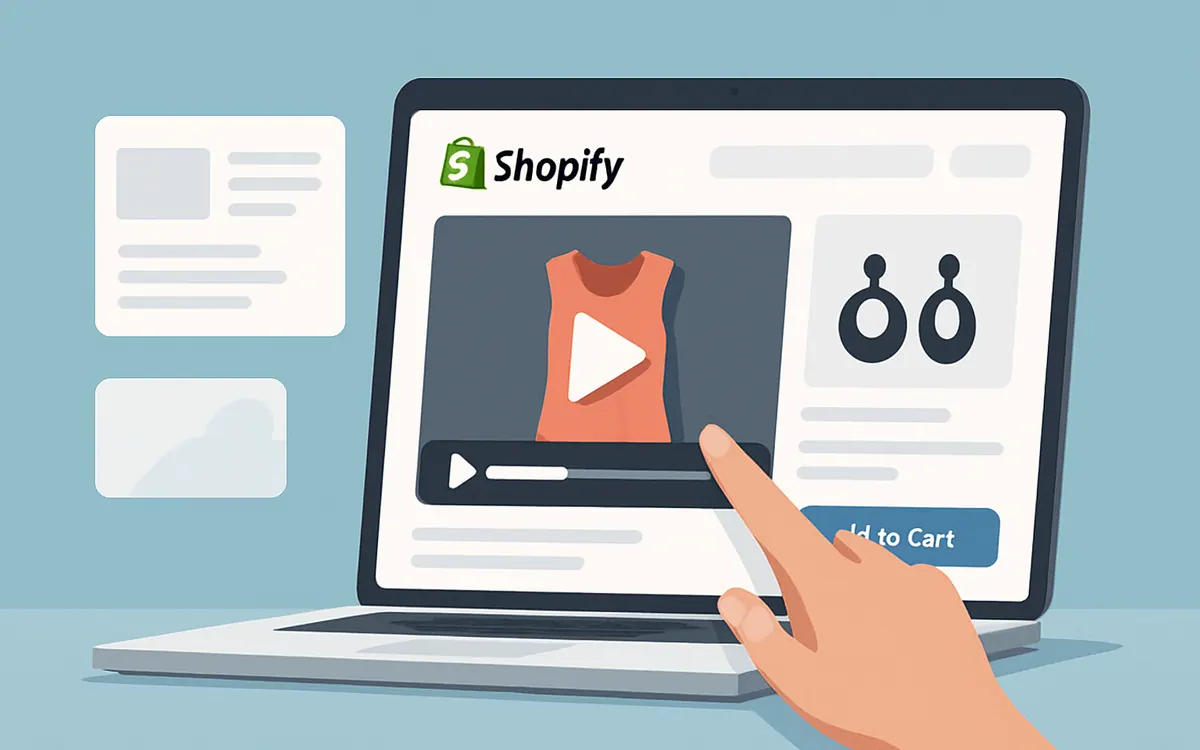
Shoppable video is an interactive e-commerce video that lets viewers explore or purchase the products shown while they watch. Instead of seeing a product and searching for it later, shoppers can click a product tag, open product details, choose a variant, visit the product page, or add the item directly to their cart. For example, a fashion styling video can tag the jacket, shirt, shoes, and accessories worn by the creator. A viewer interested in one item can then explore or purchase the complete look without leaving the video experience. In this guide, you will learn:
- What shoppable video means
- How shoppable videos work
- The main types and formats
- Real ecommerce use cases
- The benefits for Shopify stores
- How to create your first shoppable video
Quick definition: A shoppable video is an interactive video containing clickable product tags, product cards, links, or add-to-cart actions that connect video content directly to an ecommerce catalog.
What Is a Shoppable Video?
A shoppable video is a video that includes interactive product information or purchasing actions.
Products shown in the video can be connected to:
- Clickable product hotspots
- Product cards
- Product-detail overlays
- Product-page links
- Variant selectors
- Add-to-cart buttons
- Related-product recommendations
- Checkout experiences where supported
A regular product video might introduce a customer to an item, but the customer must then search for the product, locate the correct variant, and navigate through the store.
A shoppable video connects the content to the catalog. That gives the viewer a more direct route from product discovery to product consideration and purchase.
TechTarget defines shoppable video as a format that lets consumers discover products and move toward purchase using links within the video. Tolstoy similarly describes it as interactive video containing product tags, pop-ups, or purchase links.
How Does Shoppable Video Work?
The exact implementation varies between platforms, but most shoppable video experiences follow a similar process.
1. A merchant adds a video
The merchant can upload or import content such as:
- A product demonstration
- A styling video
- A tutorial
- A customer review
- User-generated content
- A TikTok or Instagram-style clip
- A recorded livestream
- A brand campaign video
2. Products are connected to the video
The merchant selects products from the ecommerce catalog and connects them to relevant points in the video.
For example, a fashion video might feature:
- A jacket
- A shirt
- A pair of trousers
- Shoes
- A bag
Each product can have its own tag or product card.
3. Interactive elements appear
As products appear on screen, viewers might see:
- A product hotspot
- A clickable product name
- A product thumbnail
- A shopping-bag icon
- A "Shop now" button
- An add-to-cart action
The interaction should appear when the relevant product is visible and remain available long enough for the viewer to use it.
4. The viewer explores the product
Selecting the interactive element might open:
- The product name
- Current price
- Product image
- Available variants
- Short product details
- Add-to-cart controls
- A link to the full product page
5. The viewer continues toward purchase
Depending on the implementation, the viewer can add the product to the store's cart or continue to the product page.
A strong implementation keeps product information, pricing, variants, and inventory connected to the merchant's current catalog rather than creating a separate, disconnected shopping experience.
6. Interactions are recorded
A shoppable video platform may track:
- Video impressions
- Video starts
- Watch time
- Product clicks
- Product-card opens
- Add-to-cart events
- Product interest
- Assisted orders
- Revenue associated with video engagement
Bambuser describes shoppable video as prerecorded or clipped video with interactive product overlays and cart integration, while also emphasizing catalog data and commerce analytics as important parts of the experience.
Shoppable Video vs Traditional Product Video
Both formats can explain and demonstrate products, but they serve different roles in the customer journey.
| Traditional product video | Shoppable video |
|---|---|
| Primarily passive content | Interactive commerce content |
| Shows product features or use cases | Connects shown products to shopping actions |
| Product links may appear elsewhere | Product links or cards appear within the experience |
| Customer may need to search manually | Customer can explore a tagged product directly |
| Usually measures views and watch time | Can measure product clicks and add-to-cart actions |
| Mainly supports awareness and education | Can support discovery, consideration, and conversion |
Traditional product videos remain valuable. A video does not need interactive elements to educate customers or build confidence.
Shoppable video adds a commerce layer when the goal is to help viewers act on the products they see.
Tolstoy's comparison similarly distinguishes traditional product videos from videos containing direct purchase links and interactive product elements.
Shoppable Video vs Live Shopping
Shoppable video and live shopping are related forms of video commerce, but they are not identical.
Shoppable video
Shoppable video is usually:
- Prerecorded
- Available on demand
- Embedded on a store or distributed through a platform
- Designed for customers to watch at any time
- Reusable across multiple pages and campaigns
Live shopping
Live shopping is:
- Broadcast in real time
- Usually presented by a host or creator
- Built around audience participation
- Often supported by live comments and questions
- Commonly used for launches, demonstrations, and limited-time campaigns
A recorded live-shopping event can later be edited into shorter, on-demand shoppable videos.
This creates two different opportunities:
- Live shopping can create event-driven attention and urgency.
- On-demand shoppable video can continue supporting product discovery after the live event ends.
Bambuser distinguishes on-demand shoppable video from real-time live shopping and notes that brands can repurpose livestream recordings into evergreen shoppable assets.
Shoppable Video vs Shoppable Video Ads
A shoppable video does not have to be an advertisement.
Shoppable video describes the interactive format. A shoppable video ad is a paid advertising placement that uses similar product-shopping interactions.
| Shoppable video | Shoppable video ad |
|---|---|
| Often displayed on an owned ecommerce store | Distributed through paid advertising |
| Can remain available indefinitely | Usually runs for a campaign period |
| Supports onsite discovery and conversion | Supports customer acquisition and conversion |
| Uses store engagement and commerce analytics | Uses advertising and attribution metrics |
| May connect directly to the store cart | May open a product page, storefront, or platform checkout |
Examples of shoppable video ads
A shoppable video ad might include:
- A product carousel below a video
- Clickable products displayed during the ad
- A "Shop now" button
- A linked product catalog
- A product landing page
- A platform-supported checkout flow
Shoppable video ads can help shorten the journey from advertising exposure to product exploration, but their results still depend on the creative, offer, targeting, landing experience, and product-market fit.
Types of Shoppable Videos
Shoppable video is not a single layout. Ecommerce brands can use several formats depending on the product and page.
Product demonstration videos
A demonstration shows how a product looks or works.
Examples include:
- Using a kitchen appliance
- Applying a skincare product
- Assembling furniture
- Testing an electronic device
- Showing the fit of an item of clothing
Relevant products can be tagged as they appear.
Tutorial and how-to videos
Tutorials naturally introduce several products within one process.
Examples include:
- A skincare routine
- A makeup tutorial
- A recipe
- A home-improvement guide
- A product-installation walkthrough
- A clothing-styling lesson
Each item used in the tutorial can have a separate product tag.
User-generated content
User-generated content includes videos created by customers, creators, influencers, or product testers.
Common formats include:
- Unboxings
- Product reviews
- Before-and-after clips
- Customer demonstrations
- Styling content
- Day-in-the-life videos
Turning this content into shoppable video can connect authentic product storytelling with the relevant store catalog.
Shoppable video carousels
A video carousel displays several videos in a row or scrollable component.
Carousels work well for:
- Best sellers
- New arrivals
- Customer reviews
- Product tutorials
- Seasonal collections
- Category-specific content
Mobile story feeds
A mobile story feed creates a vertical, swipeable experience inspired by short-form social platforms.
It can be used for:
- Product discovery
- New arrivals
- Influencer content
- Short demonstrations
- Fashion inspiration
- Beauty routines
Lookbook and collection videos
A lookbook shows several related products in one visual story.
Examples include:
- A complete outfit
- A seasonal collection
- A furnished room
- A travel kit
- A fitness setup
Each product can be tagged individually.
Livestream replays
Recorded live-shopping sessions can be repurposed into on-demand content.
Merchants can:
- Remove inactive sections
- Divide the recording into shorter clips
- Tag products
- Add the videos to product or collection pages
- Continue using the content after the live event
Shoppable video ads
Paid shoppable videos can introduce products to new audiences and connect the creative directly to product pages or purchasing actions.
Where Can Shoppable Videos Be Used?
The best placement depends on the purpose of the video.
Homepage
Homepage shoppable videos can introduce:
- New collections
- Best sellers
- Seasonal products
- Brand stories
- Featured customer content
Product pages
Product-page videos can show:
- Product use
- Fit
- Scale
- Texture
- Assembly
- Before-and-after results
- Compatible accessories
A product-page video is especially useful when static images do not fully explain the product.
Collection pages
Collection-page videos can help customers understand:
- The theme of a collection
- How products work together
- Differences between product groups
- Recommended combinations
Landing pages
Campaign landing pages can use shoppable video to connect a specific story, creator, launch, or promotion with the featured products.
Blog and editorial content
A buying guide or tutorial can include a shoppable video that lets readers explore the items discussed in the article.
Mobile storefront feeds
Vertical video feeds can create a faster, discovery-focused browsing experience for mobile shoppers.
Social and advertising campaigns
Brands can use shoppable formats within supported social and advertising platforms or direct viewers from the ad to an onsite shoppable video experience.
Benefits of Shoppable Video
Shoppable video can support ecommerce performance in several ways, but it should not be treated as an automatic conversion guarantee.
Its effectiveness depends on the content, implementation, product relevance, page placement, loading performance, and overall buying experience.
Reduces the distance between discovery and action
A viewer who sees an appealing product in a standard video might need to:
- Remember the product.
- Leave the video.
- Search the store.
- Find the correct item.
- Select the correct variant.
- Add it to the cart.
Shoppable video can remove some of those steps by connecting the product directly to the content.
Shows products in context
Video can communicate details that are difficult to show in a static photograph.
Depending on the category, it can demonstrate:
- Fit
- Movement
- Size
- Texture
- Sound
- Installation
- Application
- Product combinations
- Real-world use
Supports product discovery
A customer might start watching because of one product but discover several related products within the same video.
For example, a room-tour video might introduce:
- A sofa
- A coffee table
- A rug
- Lighting
- Decorative accessories
Makes product engagement measurable
Interactive video creates additional behavioral signals beyond views and watch time.
Merchants can learn:
- Which products receive the most clicks
- Which videos generate product interest
- Where viewers stop watching
- Which placements receive engagement
- Whether viewers add products to the cart
Reuses existing content
Merchants might already have:
- TikTok videos
- Instagram Reels
- Creator clips
- Customer reviews
- Product demonstrations
- Tutorials
- Brand videos
A shoppable video platform can help turn some of that existing content into an onsite product-discovery experience.
Supports cross-selling and bundling
Videos often show products together naturally.
This creates opportunities to introduce:
- Accessories
- Complementary products
- Complete looks
- Product bundles
- Upgrades
- Replacement items
The relationship between products should remain useful and relevant. Tagging unrelated items simply to increase the number of products can make the experience less trustworthy.
Can Shoppable Video Increase Average Order Value?
Shoppable video can contribute to a higher average order value when it helps customers discover complementary products or complete a broader purchase.
Consider these examples:
Fashion
A styling video might include:
- A dress
- Shoes
- A jacket
- A bag
- Jewelry
A customer originally interested in the dress can explore the complete look.
Beauty
A skincare routine might feature:
- Cleanser
- Toner
- Serum
- Moisturizer
- Applicator
The content explains why the products are used together instead of presenting an unrelated upsell.
Home and furniture
A room-tour video might connect furniture with:
- Lighting
- Rugs
- Cushions
- Storage
- Decorative products
Electronics
A product demonstration might feature:
- The main device
- A charger
- A protective case
- An adapter
- Compatible accessories
However, shoppable video does not automatically increase AOV.
A video featuring one product might improve engagement or purchase confidence without changing the number of products in the order. Poor tagging, irrelevant recommendations, slow loading, or an unclear interface can also limit the impact.
Track AOV alongside conversion rate, product engagement, and revenue per viewer rather than treating it as the only measure of success.
Shoppable Video Examples by Industry
Fashion and apparel A creator presents three ways to style a jacket. The jacket, shirts, trousers, shoes, and accessories are all tagged when they appear.
Beauty and skincare A step-by-step routine lets viewers explore each product without interrupting the tutorial.
Home décor A room makeover tags furniture and decorative products within the final setup.
Electronics A setup video explains how a device works and links compatible accessories.
Food and kitchen A recipe video connects ingredients, utensils, cookware, and appliances to the shopping experience.
Fitness A workout video features exercise equipment, clothing, footwear, and recovery products.
Jewelry A close-up styling video helps customers understand scale, movement, combinations, and matching pieces.
Automotive accessories An installation video shows the product in use and connects viewers to the correct model or variation.
How to Create a Shoppable Video
Step 1: Choose one objective
Start with a clear purpose, such as:
- Demonstrate a product
- Introduce a collection
- Support cross-selling
- Answer a common product question
- Reuse creator content
- Improve product discovery
- Promote a campaign
Step 2: Select the right video
Use a video that clearly shows the products.
The video should be:
- Relevant to the page
- Visually clear
- Easy to understand without excessive explanation
- Suitable for mobile viewing
- Consistent with the brand
- Properly licensed for commercial use
Step 3: Connect the products
Select the exact products shown in the video.
Verify:
- Product names
- Product-page destinations
- Prices
- Images
- Variants
- Availability
Step 4: Add product tags
Place each tag when the product becomes visible or relevant.
Avoid displaying every tag at once unless the interface remains easy to understand.
Step 5: Configure the interaction
Decide what happens after a click.
Possible actions include:
- Open a product card
- Display product details
- Select a variant
- Add the product to the cart
- Open the product page
Step 6: Choose a placement
Place the video where it supports the customer's current task.
For example:
- Demonstrations on product pages
- Lookbooks on collection pages
- Creator videos on the homepage
- Tutorials in editorial content
- Campaign videos on landing pages
Step 7: Test the experience
Test:
- Desktop behavior
- Mobile behavior
- Video loading
- Product tags
- Variant selection
- Add-to-cart actions
- Product-page links
- Captions
- Muted autoplay behavior
- Analytics events
Step 8: Measure and improve
Compare video performance by:
- Creative
- Placement
- Product
- Page type
- Video length
- Format
- Call to action
Use the results to improve the next group of videos.
Shoppable Video Best Practices
Show the product early Do not make viewers watch a long introduction before seeing the item they came to explore.
Match the video to the page A product-page video should help explain that product. A collection-page video can cover several related items.
Keep tags accurate Only tag products that are genuinely visible or discussed.
Give viewers time to interact A product should remain visible long enough for viewers to recognize it and select the tag.
Prioritize mobile usability Many short-form video experiences are consumed on mobile devices.
Test:
- Tap targets
- Product cards
- Text size
- Swiping
- Closing behavior
- Variant selectors
- Cart controls
Use captions Captions help viewers who watch without sound and improve accessibility.
Protect page performance Use appropriate video compression, delivery, loading behavior, thumbnails, and lazy loading.
Do not let an autoplaying video delay important product-page content or make the page difficult to use.
Keep catalog data synchronized Product price, availability, images, and variants should match the current ecommerce catalog.
Use a clear thumbnail The thumbnail should communicate what the viewer will see and encourage an intentional play.
Do not measure views alone A high view count does not necessarily mean the video is helping customers shop.
Track product and commerce interactions as well.
TechTarget recommends making shopping interactions visible early and ensuring products remain on screen long enough for viewers to engage.
Shoppable Video Metrics to Track
| Metric | What it tells you |
|---|---|
| Video impressions | How often the video was displayed |
| Play rate | How often viewers started the video |
| Average watch time | How long viewers remained engaged |
| Completion rate | How often viewers reached the end |
| Product click rate | How often viewers selected a tagged product |
| Product-card opens | Which products generated interest |
| Add-to-cart rate | How often viewers added a product |
| Video-assisted conversion rate | How often video engagement was associated with an order |
| Revenue per viewer | Revenue relative to the number of viewers |
| Average order value | Order value associated with video-engaged sessions |
| Product-tag engagement | Which tagged products received interaction |
| Placement performance | Which store locations generated the strongest results |
Tolstoy's guide also emphasizes commerce-focused measurements such as hotspot click-through rate, video-to-purchase conversion, and average order value.
Common Shoppable Video Mistakes
Treating a normal embed as a shoppable experience Embedding a standard video does not make it shoppable. The products need to be connected to meaningful interactive actions.
Showing product tags too late The viewer might leave before seeing how to explore the product.
Tagging too many products Too many icons and overlays can distract from the video.
Using unrelated product recommendations The tagged products should match what the viewer sees or what naturally complements it.
Ignoring mobile users An experience that works on desktop can become difficult to use on a smaller screen.
Using slow, oversized videos Poor loading performance can reduce engagement and damage the wider page experience.
Allowing product data to become outdated Incorrect prices, unavailable variants, or broken product links undermine trust.
Failing to include captions Many viewers watch short videos without sound.
Measuring only plays A video can receive many plays without generating useful product interaction.
Placing videos without a strategy A homepage, product page, and collection page serve different customer needs. Use different videos and layouts where appropriate.
How to Add Shoppable Video to Shopify
Shopify merchants can use a shoppable video app to connect product content to their store catalog without building a custom interactive video system.
A typical Shopify workflow is:
- Install a compatible shoppable video app.
- Upload or import a product video.
- Select products from the Shopify catalog.
- Add product tags or hotspots.
- Create a video widget.
- Add the widget to a storefront page.
- Test product and cart interactions.
- Monitor video analytics.
Using Hyper Shoppable Videos
Hyper Shoppable Videos helps Shopify merchants turn product videos, TikToks, Reels, and user-generated content into interactive storefront widgets.
Merchants can:
- Tag products inside videos
- Add product hotspots
- Let shoppers add items to the cart while watching
- Create video carousels
- Create mobile story experiences
- Place widgets on home, product, collection, and landing pages
- Import short-form social and product content
- Track video views, clicks, and add-to-cart events
These capabilities are listed in the official Shopify App Store description for Hyper Shoppable Videos.
Create shoppable videos for your Shopify store with Hyper Shoppable Videos →
Frequently Asked Questions
What is shoppable video?
Shoppable video is interactive video content that connects products shown in the video with product tags, cards, links, or purchasing actions.
How does shoppable video work?
A merchant connects products from an ecommerce catalog to specific moments in a video. Viewers can then select those products to see information, visit the product page, or add an item to the cart where supported.
What is the difference between shoppable video and regular video?
Regular video is mainly passive. Shoppable video includes interactive product elements that help viewers explore or purchase the products shown.
What is the difference between shoppable video and live shopping?
Shoppable video is usually prerecorded and available on demand. Live shopping is broadcast in real time and often includes a host, live comments, questions, and time-sensitive promotions.
What are shoppable video ads?
Shoppable video ads are paid video advertisements that include product links, cards, catalogs, or shopping actions.
Can shoppable video increase conversion rates?
It can support conversion by reducing the steps between product discovery and action, but the result depends on content quality, product relevance, placement, performance, and the wider store experience.
Can shoppable video increase average order value?
It can contribute to higher AOV when the video presents complementary products, bundles, routines, or complete looks. The effect is not automatic and should be measured.
Where should shoppable videos be placed?
Common placements include homepages, product pages, collection pages, landing pages, editorial content, and mobile video feeds.
Can existing TikTok or Instagram videos be used?
Yes, provided the merchant has the right to reuse the content and the selected shoppable video platform supports importing or uploading it.
Do shoppable videos slow down a website?
They can affect performance when video files and players are poorly optimized. Use compressed media, appropriate loading behavior, thumbnails, and mobile testing.
What metrics should ecommerce brands track?
Track video plays, watch time, product clicks, add-to-cart actions, assisted conversions, revenue per viewer, and average order value.
How can I create shoppable videos on Shopify?
Install a Shopify shoppable video app, upload or import a video, connect products, add interactive tags, create a widget, add it to the storefront, and test the experience.
What makes a video shoppable?
A video is shoppable when viewers can take a product action directly from the video, such as opening product details or adding an item to cart.
Where should I use shoppable videos?
Use shoppable videos on product pages, homepages, landing pages, and social or embedded video placements where product discovery matters.
What metrics should I track?
Track video plays, completion rate, product clicks, add-to-cart actions, purchases, and revenue attributed to viewers.
Do shoppable videos replace product pages?
No. Shoppable videos support product discovery and buying intent, but product pages still provide details, specifications, and checkout context.
Final Takeaway
Shoppable video connects visual product content with direct product exploration.
It can help customers understand products, discover related items, and take action without manually searching the store. It can also give merchants more useful behavioral data than a passive video embed.
The most effective shoppable videos are not simply videos covered with product links. They:
- Show products clearly
- Add interactions at the right moment
- Match the purpose of the page
- Work smoothly on mobile
- Load efficiently
- Use accurate catalog data
- Measure product and commerce engagement
For Shopify merchants, a dedicated app such as Hyper Shoppable Videos can provide product tagging, video widgets, carousels, mobile stories, add-to-cart interactions, and video analytics without requiring a custom video-commerce build.
Where shoppable video pays off
Two further angles on where this format earns its place:
- the niches seeing the strongest results — categories where video changes the decision.
- video within a wider conversion programme — how it fits alongside search and support.