Key takeaways
- Most Shopify selling mistakes are not store setup errors; they are unanswered shopper questions about fit, trust, availability, use, price, or next steps.
- If shoppers cannot find the right product, fix search, filters, synonyms, collection logic, and merchandising before rewriting product descriptions.
- If shoppers keep asking the same pre-purchase questions, fix support content and product FAQs before spending more on traffic.
- If shoppers hesitate because they cannot imagine the product in real use, richer product content or shoppable video may be the better fix than another discount.
What are common Shopify selling mistakes? The useful answer is not a generic list of weak copy, slow pages, and bad ads. The better diagnostic is to ask which shopper question the store fails to answer at the moment of intent. As of October 2026, Shopify merchants still lose sales when the product exists, the price is acceptable, and the traffic is qualified, but the store does not resolve the next buying question quickly enough.
Start with the shopper question, not the app category
The fastest way to diagnose weak Shopify sales is to write down the shopper question that went unanswered, then assign the fix to merchandising, support, or richer product content. Do not start with an app name. Start with the point of confusion.
For example, a shopper searching for black linen dress should not need to know your internal product naming. If the relevant item is tagged as charcoal resort maxi and does not appear, the failure is product discovery. A shopper asking whether a ceramic mug is dishwasher safe is not asking for a prettier homepage. That is a support and product information gap. A shopper who likes a jacket but cannot judge drape, length, or movement from still photos may need a better product demonstration.
Use this decision rule tomorrow: collect 25 real search terms, 25 pre-purchase support questions, and the top 10 product pages by traffic with weak add-to-cart behavior. Group every issue under one shopper question. If more than one-third of search terms expose missing products, begin with search and filters. If repeated questions appear in chat, email, or social comments, begin with FAQs and support content. If shoppers view but do not act on visual categories such as apparel, beauty, home, or accessories, review whether still images answer enough.
This question-first method also prevents tool stacking. Hyper Apps supports three different jobs, but NiagaraT would not treat every conversion problem as the same problem. Product discovery belongs near Hyper Search & Filter. Repeated product and policy questions belong near Hyper AI Chat & FAQs. Product demonstration and visual shopping moments belong near Hyper Shoppable Videos.
Can the shopper find the right product?
If shoppers cannot find the right product, the common Shopify selling mistake is poor discovery, not weak demand. Search and filters fail quietly because the shopper simply leaves, especially on mobile where browsing patience is short.
Start with zero-result searches. A zero result for a nonsense query is harmless. A zero result for common language is expensive. If your store sells trainers but shoppers search sneakers, runners, walking shoes, gym shoes, or tennis shoes, the search layer has to account for that language mismatch. The same applies to size, color, use case, and material. A shopper searching wedding guest dress, wide calf boot, refill pouch, or fragrance free sunscreen is giving you merchandising intent in plain language.
Next inspect filter combinations. Filters are useful only when they narrow choice without dead-ending the shopper. The dangerous combinations are often specific: size M plus green plus linen, king plus low profile plus storage, or vegan plus waterproof plus size 8. If a filter produces no items, hide the impossible option, adjust tagging, or create a merchandising route to the nearest alternative. Filters that return nothing convert nobody.
A practical threshold: if more than 10 percent of meaningful on-site searches return no products, or if your top 20 searches include brand, category, or use-case terms that do not match results, search deserves attention before creative testing. For a deeper search diagnostic, compare this article with Shopify site search how to improve: Diagnose First and the Shopify Search Relevance Audit Tool.
Can the shopper understand the product without contacting you?
If shoppers keep asking the same question before buying, the common Shopify selling mistake is making support carry information that should be present at the point of decision. Good support helps shoppers. Repetitive support often reveals missing product content.
Look at questions that arrive before purchase, not only complaints after delivery. The important questions are specific: Does this fit a 14-inch laptop? Is the fabric lined? Does the supplement contain caffeine? Can this be used on color-treated hair? Is the toy safe for a three-year-old? Does the table require assembly? Each question blocks checkout because the shopper cannot price the risk.
The fix is not to paste a huge FAQ at the bottom of every page. Put the answer where the question forms. Sizing questions belong near size selection. Material and care questions belong near product details. Shipping cutoffs belong near delivery estimates or cart. Return rules for final sale items belong before checkout, not only in a footer policy page.
Use this threshold: if a pre-purchase question appears five or more times in a month, write a canonical answer and place it on the product page, FAQ surface, or support flow. If a question includes order status, returns, warranties, compatibility, or product comparisons, the support layer may need better structure. Merchants comparing FAQ and support options can use the Shopify FAQ App Scorecard: 5 Buying Gates before reviewing Hyper AI Chat & FAQs.
Can the shopper see the product in use before buying?
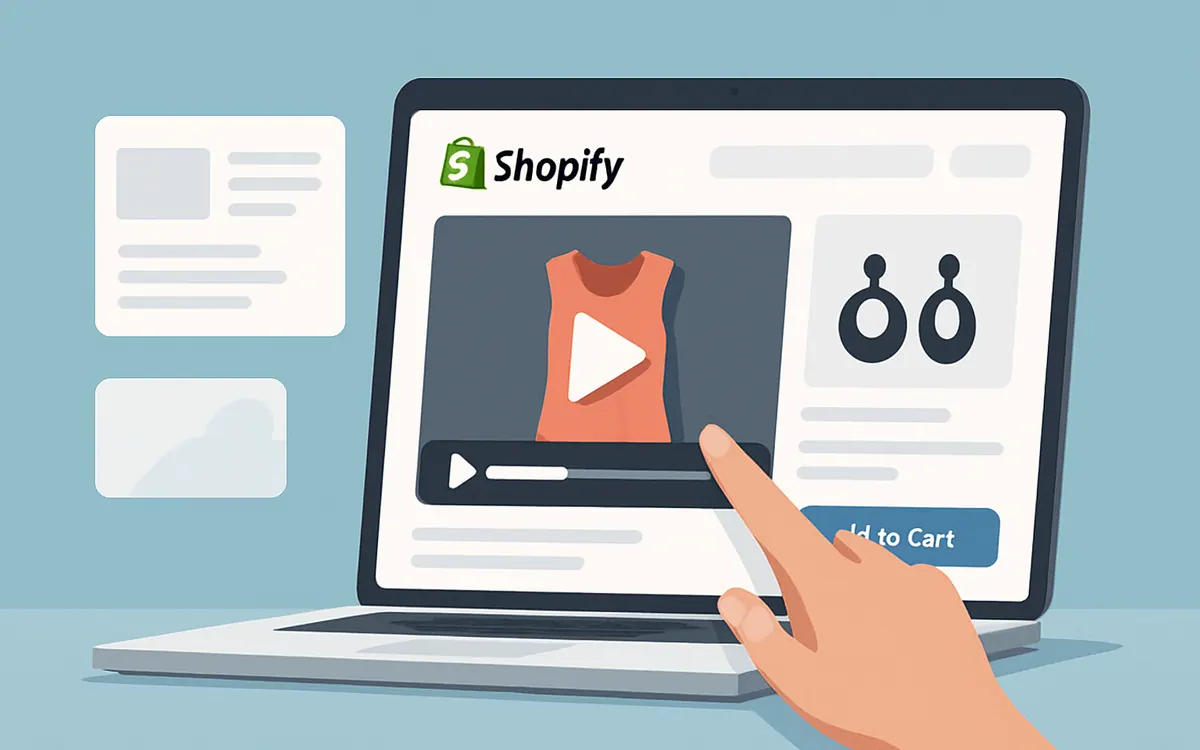
If shoppers understand the product but still hesitate, the common Shopify selling mistake may be thin product demonstration. Static photos can describe a product, but some categories need motion, scale, texture, routine, or context before the shopper feels ready.
This is not a claim that every product needs video. Commodity refills, known replacement parts, and simple accessories may convert with clear images and specs. Video earns its keep when the buying question is visual or practical: How sheer is the dress in daylight? How much does the bag hold? How does the skincare texture absorb? How large is the lamp beside a sofa? What does the product look like on a real person rather than a cropped studio shot?
A simple test is to read the product page with the images hidden. If the remaining text cannot explain fit, scale, use, or outcome, you need better content. Then watch the product page with the text ignored. If the visuals cannot answer movement, size, or context, video may help.
Use a conservative rule: start with 5 to 10 high-traffic products where shoppers view repeatedly but add to cart at a weaker rate than similar items in the same price band. Do not film the entire catalog first. Create short demonstrations that answer one buying question each. For planning examples, see Maximizing Merchandising Impact with Shoppable Video on Shopify, then review Hyper Shoppable Videos if video is the right category of fix.
The same symptom can point to three different fixes
A weak conversion rate does not tell you what to fix until you connect the symptom to shopper behavior. The same surface metric can come from a search issue, a support issue, or a product content issue.
For example, a product page with heavy traffic and low add-to-cart could mean the wrong shoppers arrived from search. It could mean the page did not answer a compatibility question. It could also mean shoppers could not judge the product visually. Treat conversion rate as the smoke, not the fire.
Use the table below to separate diagnosis from solution. The first pass should take one work session, not a quarter. Pull search logs, support tickets, product page analytics, and merchandising notes into one sheet. Then assign each issue to the first unresolved shopper question.
| Criterion | What to check | Why it matters |
|---|---|---|
| Zero-result rate | Share of searches returning nothing | Direct lost revenue |
| Search language mismatch | Shopper terms that differ from product titles, tags, or collections | Shows where catalog language and buyer language do not meet |
| Dead-end filters | Popular filter combinations that return no products or poor matches | Blocks high-intent shoppers after they have narrowed choice |
| Repeated pre-purchase questions | Questions appearing in chat, email, comments, or calls at least five times in a month | Reveals missing product or policy answers |
| Visual hesitation | High views, repeat visits, or saves on products where images do not show use, scale, or movement | Indicates the shopper may need demonstration, not another coupon |
| Policy uncertainty | Questions about shipping, returns, warranties, subscriptions, or final sale | Raises perceived risk at checkout |
The trade-off is speed versus precision. A fast diagnosis may misclassify a few issues, but it stops teams from debating abstractly. A precise diagnosis takes more instrumentation, but it can wait until the first obvious errors are fixed.
Use a 30-day diagnostic before buying another Shopify app
Before adding another Shopify app, run a 30-day diagnostic that connects search behavior, support questions, and product content gaps. The goal is not to avoid apps. The goal is to buy the right category of help.
During week one, export or record your top on-site searches, zero-result searches, and filtered collection paths. Mark every query where a reasonable shopper would expect a product that exists in your catalog. During week two, tag support questions as product fit, product use, shipping, returns, payment, warranty, subscription, or order status. During week three, review your highest-traffic product pages and note where the page fails to answer fit, scale, material, compatibility, care, assembly, or use. During week four, compare the three lists and pick the constraint that appears most often.
Use numbers, even rough ones. If 200 shoppers searched in a month and 35 meaningful searches returned nothing, discovery is probably the first fix. If support received 60 pre-purchase questions and 18 were about sizing on the same apparel category, product content and FAQs need attention. If one hero product received 1,000 views, 80 add-to-carts, and repeated social comments asking how it looks on different body types, still images may not be doing enough work.
This process also helps agencies. Instead of telling a client that conversion is down because the site needs optimization, the agency can say that 17 percent of meaningful searches missed existing products, or that one policy question appeared 42 times. That level of diagnosis makes the next recommendation more credible.
Map the issue to the right Hyper Apps category
The right Hyper Apps category depends on the shopper question that fails, not on the broad desire to improve conversion. Start with the failure mode, then choose the product area that matches the job.
Choose search and filter work when shoppers reveal intent but cannot reach the right product set. Typical signals include zero-result searches for products you sell, poor results for synonyms, filters that create empty collections, or merchandising rules that bury seasonal winners. In that case, review Hyper Search & Filter and compare it with your catalog requirements, search language, and mobile filter needs.
Choose AI chat and FAQ work when shoppers can find products but cannot resolve risk. Typical signals include repeated questions about sizing, compatibility, ingredients, delivery timing, returns, warranties, subscriptions, or product comparisons. In that case, review Hyper AI Chat & FAQs and decide which answers belong on product pages, which belong in a help experience, and which still require human support.
Choose shoppable video work when shoppers need to see the product in use. Typical signals include visual categories with weak add-to-cart, repeated questions about scale or movement, social proof content that performs better than studio images, or products where the use case matters more than the spec sheet. In that case, review Hyper Shoppable Videos after selecting a small product set to test.
If the team is still uncertain, start at the Hyper Apps overview and map each app category to one unresolved shopper question. A clean buying decision should sound like this: We need search because shoppers cannot find existing products, not because conversion is down.
FAQ
What are common Shopify selling mistakes?
Common Shopify selling mistakes are unanswered shopper questions that block product discovery, trust, product understanding, or checkout confidence. Typical examples include weak search results, confusing filters, missing sizing or compatibility details, unclear shipping and return information, thin product visuals, and support answers that are not visible where the shopper needs them. The practical fix is to identify the question first, then decide whether merchandising, support content, or richer product content should own the answer.
What is the downside of Shopify?
The main downside of Shopify is that merchants still have to make strong operating decisions about catalog structure, content, apps, policies, and merchandising. Shopify gives merchants a commerce platform, but it does not automatically create buyer language, answer every product question, or produce high-quality product demonstrations. App choices can also create cost and maintenance overhead if the team installs tools before defining the job. The better approach is to diagnose the constraint first and then select the smallest app stack that covers it.
What are the best free apps for Shopify?
The best free apps for Shopify are the ones that fix a measured problem without adding unnecessary maintenance. There is no universal free app list that fits every store. A new merchant should first use Shopify native capabilities where they are enough, then add free or paid apps only when a specific gap appears. For example, if the issue is product discovery, evaluate search and filter needs. If the issue is repeated questions, evaluate FAQs and support flows. If the issue is product demonstration, evaluate video content tools.
What are some common flaws in Shopify?
Common flaws merchants experience on Shopify are usually default gaps rather than unavoidable platform defects. Stores can suffer from limited search tuning, inconsistent product tags, weak collection logic, thin product detail pages, unclear policy placement, and an app stack that grows without ownership. These problems are fixable, but Shopify will not fix them automatically. The merchant needs a catalog owner, a support content owner, and a merchandising owner, even if one person holds all three roles early on.
Is Shopify still worth it in 2026?
Yes, Shopify can still be worth it in 2026 when the merchant has a real product, a clear margin model, and the discipline to manage product discovery, content, support, and acquisition costs. Shopify is not a shortcut around market fit or operations. It is a commerce platform that can support serious stores when the team treats setup as the beginning, not the finish line. If the store cannot answer basic shopper questions, switching platforms is unlikely to solve the core issue.
What cannot be sold on Shopify?
Products that violate Shopify policies, applicable law, or payment processor rules cannot be sold on Shopify. Restricted or prohibited categories can include certain regulated goods, illegal products, unsafe products, and items that payment providers will not support, but the exact answer depends on the product, jurisdiction, and processor. Merchants should check Shopify policy documents and payment provider rules before sourcing inventory, especially in regulated categories such as supplements, weapons, adult products, medical claims, or financial products.
What is the most selling item on Shopify?
There is no single most selling item on Shopify that every merchant should copy. Shopify includes many categories, and the best-selling product for one store may fail in another because audience, margin, supply, creative, and repeat purchase behavior differ. A better question is which product in your catalog has demand, margin, availability, and enough content to answer buyer objections. Use a worksheet such as What is the most selling item on Shopify? 4-factor worksheet to evaluate products before chasing trends.