Key takeaways
- The best Shopify merchandising examples solve a defined shopper task, such as narrowing 200 dresses by fit, comparing three coffee grinders, or checking whether a replacement part fits a specific model.
- Catalog conditions determine which pattern to use: filters require consistent attributes, comparison blocks require shared specifications, and demonstration videos require products that benefit from motion or context.
- Every merchandising pattern has a failure mode. Filters can create empty combinations, bestseller ordering can bury relevant products, and generic recommendations can imply compatibility that does not exist.
- Merchants should test one pattern on one collection or product type before changing the entire storefront, using measures tied to the shopper task rather than total store revenue alone.
- Hyper Apps addresses three different merchandising layers: Hyper Search & Filter for discovery, Hyper AI Chat & FAQs for product questions, and Hyper Shoppable Videos for demonstration-led shopping.
Read merchandising examples as task maps
The best Shopify merchandising examples are not simply attractive stores. A useful example shows what the shopper is trying to accomplish, when the pattern fits the catalog, what the merchant must configure, and how the implementation could fail. Copying the visual treatment without those annotations often imports the wrong solution.
A prominent size filter makes sense for footwear with dependable variant data. It contributes little to a store selling six one-size accessories. A comparison table helps when similar products differ on specifications shoppers understand, but it adds work without reducing uncertainty when the range is differentiated mainly by taste.
As of September 2026, Shopify teams should also assess examples on mobile and desktop instead of treating a polished desktop screenshot as the finished experience. On a phone, an accessible filter control can matter more than a large collection banner. Product cards need enough information to support a decision without becoming too tall to scan.
Use four annotations when reviewing any store: shopper task, suitable catalog conditions, storefront element, and failure mode. If the team cannot identify all four, keep the example in the inspiration folder rather than adding it to the development backlog.
Nine patterns and the conditions they need
The right merchandising pattern removes the next obstacle in a specific shopping journey. The table below maps nine common patterns to the catalog conditions and storefront work behind them. Treat the configuration column as the minimum operating requirement, not a guarantee of better performance.
| Pattern | Shopper task | Suitable catalog conditions | Storefront element to configure |
|---|---|---|---|
| Faceted collection | Reduce a large category to a viable shortlist | Products share structured attributes | Filters, values, counts, and mobile controls |
| Intent-led search | Find products using shopper language | Queries include use cases, synonyms, or model terms | Query mappings, suggestions, and result rules |
| Curated collection order | See timely or relevant products first | Collection depth makes ordering consequential | Ranking, availability, and seasonal rules |
| Comparison block | Choose between similar products | Items share decision-making specifications | Attribute rows, labels, and selected products |
| Complete-the-look set | Assemble compatible products | Products have clear aesthetic or functional relationships | Product relationships and placement |
| Use-case navigation | Shop by activity, room, problem, or recipient | Shoppers think beyond the internal taxonomy | Navigation choices and curated destinations |
| Product-question FAQ | Resolve an objection without leaving the page | Questions recur before purchase | Product-specific questions and maintained answers |
| Demonstration video | Understand fit, movement, scale, or operation | Context changes how the product is understood | Video placement and linked products |
| In-stock alternative path | Continue shopping when a preferred item is unavailable | Comparable substitutes exist | Availability messaging and alternative products |
Do not launch all nine together. If shoppers cannot narrow a 500-item collection, fix the shortlist problem before adding video. If product-page visitors repeatedly ask whether a component fits their model, resolve compatibility questions before rearranging collection cards. The first decision is not which pattern looks best; it is which blocked task affects a meaningful part of the catalog.
Filters, search, and ordering solve shortlist problems
Faceted collections work when shoppers know the constraints of an acceptable product but not the exact item. Consider a store with 240 running shoes. A useful filter set might include size, width, terrain, support type, and waterproof status. Brand and color can remain available, but they should not displace attributes that determine whether the shoe can be worn.
The configuration work starts in product data. Normalize values such as “Wide,” “W,” and “2E” before exposing them as one concept. Check combinations including size 12, wide, waterproof, and road. If that combination returns nothing, counts should make the dead end apparent before the shopper selects every value. The Shopify collection filter examples by catalog type explain how filter priorities change across apparel, beauty, parts, and other catalogs.
Intent-led search addresses a different task: shoppers have words, but those words may not match product titles. A lighting store may receive “reading lamp” while its catalog uses “adjustable floor light.” Map terms only when they represent compatible intent. Do not equate linen with cotton merely to prevent zero results. Review the top 50 internal queries and every recurring zero-result query before building a large synonym list.
Curated ordering controls what appears first after the store has found a valid set. Define treatment for out-of-stock products, launches, seasonal items, and promoted inventory. Commercial priority should not erase relevance. Hyper Search & Filter is the Hyper Apps option to compare when the primary job is collection or search discovery.
Comparison, sets, and use cases support different choices
Comparison blocks are useful when shoppers are choosing among near substitutes. A coffee equipment store could compare three grinders by burr type, grind settings, hopper capacity, dimensions, and suitable brew methods. Limit the table to attributes that can change the decision. Internal product codes and minor packaging differences make the table longer without making the choice easier.
Complete-the-look merchandising solves compatibility rather than substitution. On a navy blazer page, a set might include matching trousers, a shirt, and a belt. The merchant must define whether compatibility is visual, technical, or both. A battery and power tool require verified technical compatibility; two cushions may be connected through color and texture. A popularity rule must never imply technical compatibility on its own.
Use-case navigation begins earlier in the journey. Instead of asking shoppers to choose “cookware,” a kitchen store could offer routes for induction cooking, small kitchens, first apartments, or gifts under $100. Each route needs enough relevant, available products to keep its promise. Audit the destination whenever assortment or stock changes.
Use a simple decision rule: comparison answers “Which one?” A set answers “What goes with this?” Use-case navigation answers “Where do I start?” For placement choices across product and cart journeys, review related products by merchandising job.
Questions, video, and alternatives reduce product uncertainty
Product-question merchandising should sit near the information that creates the question. A skincare product may need answers about routine order, skin type, texture, and package size. A replacement part may need model compatibility, dimensions, and installation requirements. Shipping and returns still matter, but a generic policy FAQ does not replace product-specific guidance.
Start with five to eight pre-purchase questions for one product type. Use recurring questions from sales and support conversations, assign an owner, and review answers when ingredients, measurements, packaging, instructions, or policies change. Hyper AI Chat & FAQs is the Hyper Apps option to assess when shoppers need help resolving product questions.
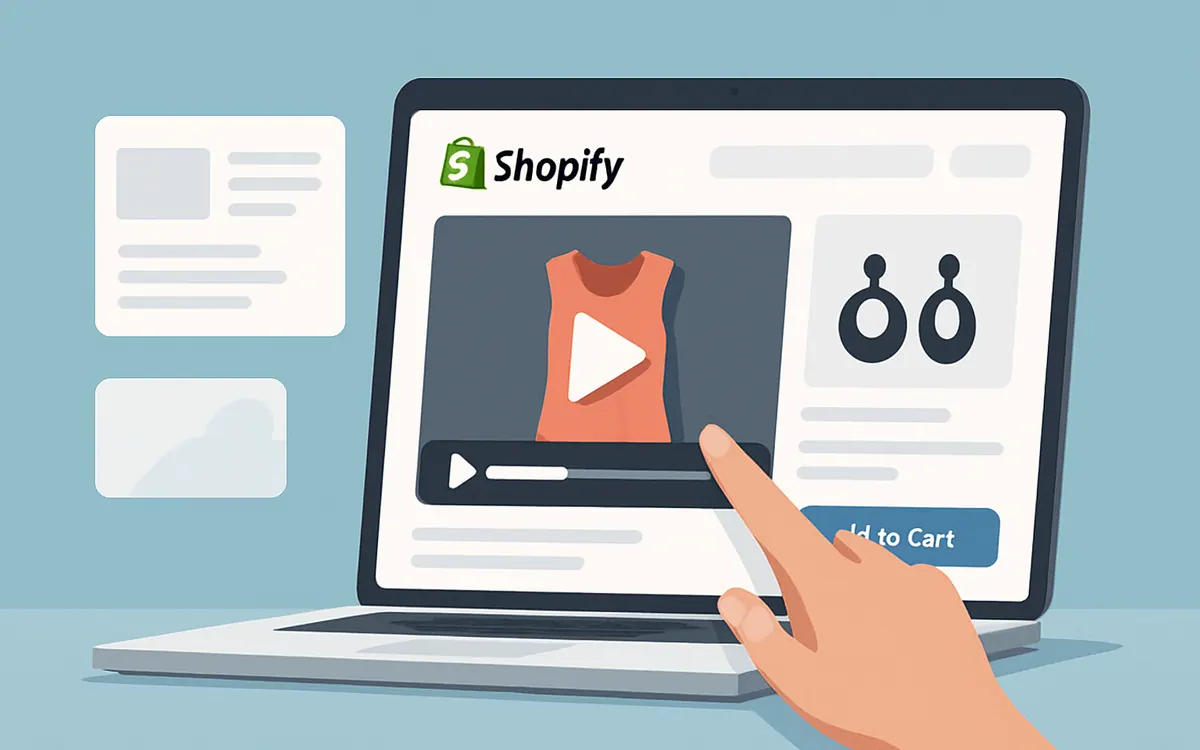
Demonstration video fits products where movement, fit, scale, texture, or operation is hard to understand from still images. A short clip can show how a folding stroller closes, how a dress moves, or how a storage unit fits under a desk. Keep dimensions and critical specifications in text because video should not be the only source of essential information. Merchants can use Shopify homepage shoppable video best practices to compare placement decisions and review Hyper Shoppable Videos for this merchandising layer.
An alternative path answers “What can I buy if this is unavailable?” Match substitutes on the attribute that drove the original choice. For footwear, that may be size, width, and intended use. A random bestseller is not a substitute merely because it is in stock.
How should a merchandising pattern be tested?
Test one shopper task on a bounded part of the catalog before expanding the pattern. A high-traffic collection with a known problem is usually a cleaner starting point than the homepage because visitor intent is easier to interpret. Record the current configuration, affected products, and test period so assortment changes do not disappear into the analysis.
Use this sequence:
- Define the task in one sentence, such as “Help shoppers find an in-stock waterproof hiking jacket in their size.”
- Choose the smallest configuration that addresses it: size, waterproof status, activity, availability behavior, and mobile filter access.
- Check at least ten realistic paths manually, including combinations that should return no products and products with missing data.
- Compare equivalent periods while noting promotions, stockouts, traffic mix, price changes, and catalog additions.
Choose measures tied to the task. For filters, inspect use, result counts, collection exits, and product views after filtering. For search, review common queries, zero-result searches, reformulations, and product clicks. For FAQs, inspect which questions shoppers ask and whether the underlying answer remains accurate. For video, compare product visits and add-to-cart behavior across exposed journeys without assuming that every later action was caused by the video.
Set a rollback rule before launch. For example, delay a new collection filter if more than 10% of an audited product sample has missing or contradictory values. That figure is an operating safeguard for the project, not a universal ecommerce benchmark. The Shopify storefront filtering readiness checklist can help structure the pre-launch review.
A practical rollout starts with data, not design
The first week of a merchandising project should identify the task and inspect the data needed to support it. For a footwear collection, sample 50 products across brands and check whether size, width, activity, material, and waterproof status use consistent values. For a compatibility FAQ, sample the ten products that generate the most questions and confirm that the answers can be maintained from an authoritative internal source.
In the second stage, configure the smallest viable pattern on one collection or product family. Keep a written list of included products, excluded products, rules, and expected shopper paths. Review the mobile experience before release, including filter access, card height, video controls, comparison width, and the route back to the collection.
After launch, assign an owner and a review trigger. Seasonal collections should be reviewed before their campaign begins. Compatibility content should be reviewed when models change. Product sets should be checked when any linked item goes out of stock. Search mappings should be revisited when query language changes or new product types enter the catalog.
Merchants deciding where Hyper Apps fits can compare the three discovery layers through the Hyper Apps overview: shortlist creation with search and filters, question resolution with AI chat and FAQs, and product demonstration with shoppable video.
FAQ
What are good examples of Shopify stores?
Good Shopify store examples are stores where each storefront element clearly resolves a shopper task. Look for collections that narrow by meaningful attributes, comparison content that uses decision-making specifications, product pages that answer concrete objections, and recommendations that preserve compatibility. Evaluate the pattern rather than copying a brand name or visual style.
What are the five R's of merchandising?
The five R's are commonly expressed as the right product, in the right place, at the right time, at the right price, and in the right quantity. Wording varies across retail teams, but the operating idea is consistent: assortment, placement, timing, price, and availability must support the same customer need. Translate each R into a storefront check rather than treating the framework as a slogan.
Where can merchants find free Shopify merchandising examples?
Merchants can study free examples in Shopify stores, theme demos, merchandising resources, and their own search and support data. The example may be free to inspect, but implementation still carries data, design, development, app, and maintenance costs. Start by documenting one pattern with screenshots and the four annotations used in this guide before paying to reproduce it.
What is the most profitable thing to sell on Shopify?
There is no universally most profitable product to sell on Shopify. Profit depends on selling price, product cost, shipping, returns, acquisition expense, repeat purchase behavior, competition, and operating overhead. Compare contribution margin per order and the cost of serving the category instead of choosing an item from a generic bestseller list.
Is Shopify still worth using in 2026?
Shopify can be worth using in 2026 when its operating model matches the merchant's catalog, team, budget, markets, and required workflows. Evaluate total platform and app costs, theme work, payment needs, product data requirements, and staff ownership. The decision should follow a requirements check rather than the popularity of the platform.
What is the highest-selling item on Shopify?
There is no single public, durable highest-selling item across all Shopify stores. Shopify supports independent merchants across many categories, and product-level sales change by market, season, price, and reporting period. Use store-specific demand, margin, return, and inventory data when deciding what deserves prominent merchandising.