Key takeaways
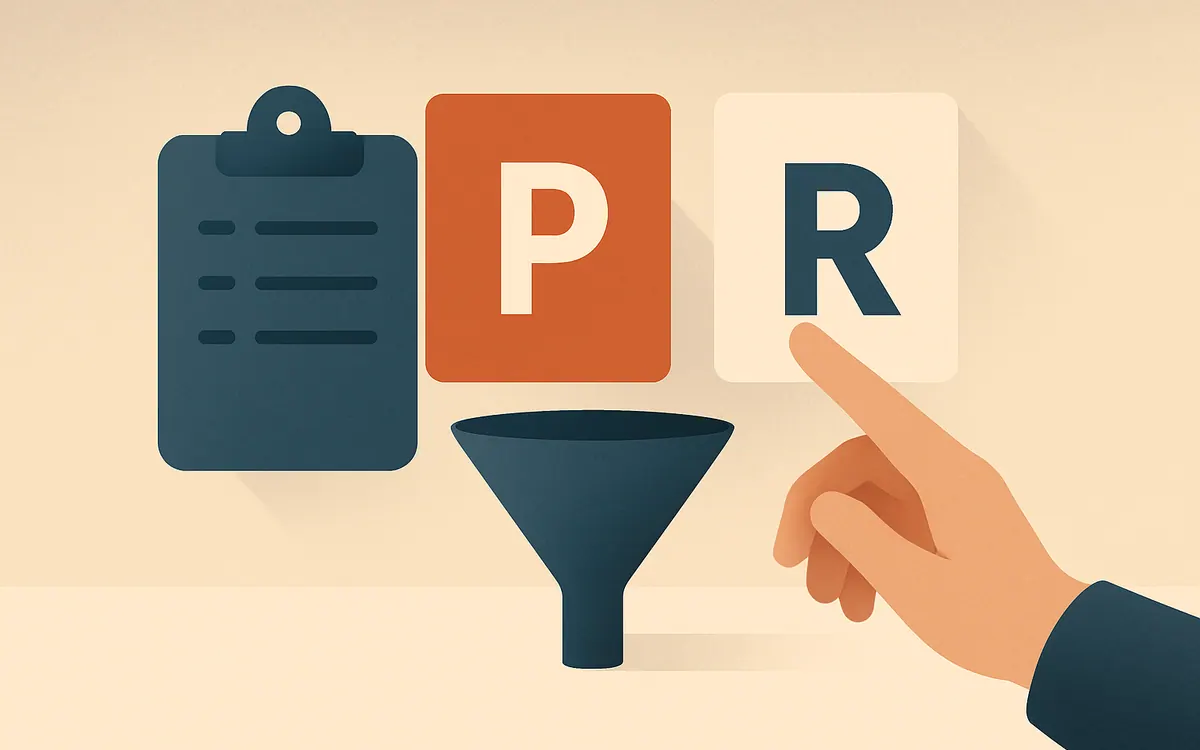
The 5 P's vs 5 R's of merchandising is not an either-or choice. Shopify teams can use the 5 P's to shape the customer-facing offer and the 5 R's to check whether inventory, timing, quantity, price, and placement can support that offer.
- The 5 P's are most useful when deciding what a Shopify collection should communicate through product selection, price, promotion, placement, and people or service context.
- The 5 R's are an operating check: the right product, quantity, place, time, and price must align before a campaign or collection is ready for traffic.
- A product is not in the right place merely because it has a collection assignment; it must also appear for relevant searches, filters, recommendations, and campaign landing paths.
- Shopify teams should review zero-result searches, empty filter combinations, out-of-stock rankings, and collection positions before increasing campaign traffic.
- Use the frameworks together: plan the storefront with the 5 P's, validate execution with the 5 R's, and assign one owner to fix each failed check.
As of September 2026, the practical value of either framework is still the same: it gives merchandising teams a repeatable way to make decisions instead of rearranging products according to taste.
The frameworks solve different merchandising problems
The 5 P's describe the customer-facing merchandising plan, while the 5 R's test whether the store can deliver it. A common 5 P's formulation is product, price, promotion, placement, and people. A common 5 R's formulation is the right product, in the right quantity, at the right place, at the right time, and at the right price. The wording varies among retail organizations, so teams should document the version they use rather than argue over labels.
For a Shopify store, the distinction is practical. The 5 P's help a merchant decide whether a summer footwear collection needs sandals, entry and premium price points, a promotion, prominent homepage placement, and enough product information for shoppers. The 5 R's then ask whether the featured sizes are actually available, whether the products appear in the correct collection and search results, and whether the offer is scheduled for the right dates.
Use the 5 P's during campaign planning and storefront design. Apply the 5 R's before launch and during daily or weekly trading reviews. If a small team can support only one routine, combine them in a single ten-question checklist rather than choosing one framework and ignoring the other.
How do the 5 P's map to a Shopify storefront?
The 5 P's become useful when each P owns a visible Shopify decision. Start with product: define which items belong in the collection and which attributes make them relevant. A rain-jacket collection might require waterproof construction, adult sizing, and active inventory rather than every product tagged as outerwear.
Price means more than choosing a selling price. Check whether the collection contains a usable price ladder. If 18 of 20 jackets cost more than $250, a price filter under $150 may create a thin or empty result set. Either add qualifying products, remove the misleading option, or explain that the assortment is premium.
Promotion covers the offer and how shoppers encounter it. Confirm that promoted products are eligible, discount language matches the actual conditions, and sale items remain discoverable after filtering. Placement covers homepage modules, collection order, search ranking, navigation, and product recommendations. People covers the shopper and the team serving that shopper: identify the intended audience, the questions blocking purchase, and the employee responsible for maintaining the collection.
For a repeatable page structure, use a Shopify collection page discovery blueprint to review navigation, filters, product order, and supporting content together rather than treating them as unrelated theme components.
The 5 R's turn strategy into inventory decisions
The 5 R's are a launch gate for inventory and discovery. Right product means the item matches the shopper's intent, not merely the campaign theme. A search for black linen trousers should not prioritize black polyester trousers because both share a color tag. Review attribute quality before adjusting rankings.
Right quantity means enough sellable depth exists in the variants customers want. Ten units spread across unpopular sizes do not provide the same buying opportunity as ten units aligned with recent demand. Set a store-specific rule for whether low-stock products remain promoted, move lower, or display with clear availability.
Right place translates into every digital surface where intent appears: collections, onsite search, filters, navigation, recommendations, and campaign pages. Right time covers seasonality, launch dates, replenishment, and promotion windows. Right price checks both customer expectations and internal commercial requirements without assuming the lowest price is correct.
Run the 5 R's at SKU and variant level. A product can pass at product level while failing because its promoted color or core sizes are unavailable. Before sending paid traffic, test the collection as a shopper would: choose the advertised size, color, price range, and availability options, then confirm that useful products remain.
Use both frameworks in a weekly Shopify workflow
A weekly merchandising review should move from demand signals to storefront changes, then to an owner and deadline. Begin with the previous seven days of onsite search terms, collection visits, filter use, product views, stock changes, and campaign plans. Compare these inputs with a longer period when the week contains a promotion, holiday, or unusual stock event.
Use the 5 P's to decide what the store should present. Use the 5 R's to identify where that plan fails operationally. The following checks turn the frameworks into work that can be assigned:
| Criterion | What to check | Why it matters |
|---|---|---|
| Zero-result rate | Share of searches returning nothing | Direct lost revenue |
| Empty filter paths | Size, color, brand, price, and availability combinations with no products | Shoppers reach dead ends after expressing clear intent |
| Collection depth | Sellable products and variants across the planned price ladder | A collection may look broad while offering few real choices |
| Product position | Which products occupy the first 12 collection and search slots | Early positions receive the most immediate attention |
| Stock exposure | Out-of-stock and low-stock products appearing in prominent positions | Unavailable products can displace purchasable alternatives |
| Campaign timing | Promotion dates compared with stock arrival and collection publication | Traffic should not arrive before the assortment is ready |
Do not change every weak result at once. Pick the three failures with the clearest shopper intent, such as a high-frequency query with no result, a popular size filter that empties a collection, or an unavailable product holding the first position. Assign one owner and a review date. The Shopify Search Relevance Audit Tool can provide a structured starting point for the search portion of this review.
Search, filters, and collections expose merchandising gaps
Search and filters reveal whether the merchandising plan survives contact with shopper intent. Collection pages show what the merchant wants to sell; search terms and filter combinations show how customers describe what they want to buy. A mismatch is a merchandising issue before it is a design issue.
Review the top 20 non-brand searches each week. For each query, check relevance in the first 10 results, inventory availability, price range, and whether obvious synonyms or product attributes are represented. Then test the collection's most commercially important filter combinations. In apparel, that might be category plus size plus color. In furniture, it might be room plus material plus width. Fix combinations tied to real demand before adding more filter options.
Hyper Search & Filter can support the product, placement, and availability decisions identified by this review. Evaluate it against the requirements your store has documented rather than treating an app installation as the merchandising strategy itself. Teams still deciding between native and added capabilities can use the Shopify native search versus third-party app comparison to frame that choice.
After implementation, repeat the same queries and filter paths used in the baseline review. Keep a dated record of what changed so the team can separate intentional placement decisions from catalog or inventory side effects.
A seasonal collection shows how the frameworks work together
A concrete collection plan makes both frameworks easier to apply. Consider a 60-product outdoor store preparing a 24-product spring hiking collection. Under the 5 P's, product sets the eligibility rule: lightweight jackets, trail trousers, daypacks, and rain accessories suitable for spring conditions. Price requires useful choices at entry, middle, and premium levels. Promotion defines which products qualify for the campaign. Placement assigns products to navigation, search results, collection positions, and homepage exposure. People identifies new hikers as the primary audience and assigns a merchandiser to maintain the page.
The 5 R's then challenge the plan. If four jackets occupy the first eight positions but common sizes are unavailable, the collection lacks the right quantity. If waterproof daypacks appear only after page two or fail to surface for rain pack searches, they are not in the right place. If replenishment arrives after the campaign starts, the timing is wrong even if the collection looks complete in preview.
Set launch gates before publication. For example, require at least 18 of the planned 24 products to be sellable, no promoted query to return zero results, and every advertised filter path to retain at least three choices. Those are example rules, not universal benchmarks; adjust them to assortment width and buying patterns. For recurring campaigns, the guide to creating seasonal Shopify filter sets can help turn this review into a maintained process.
FAQ
The definitions below use common retail formulations, but terminology differs among courses and companies. A Shopify team should choose one documented version, attach each term to a storefront decision, and use it consistently in planning meetings and trading reviews.
What are the 5 P's of merchandising?
The 5 P's of merchandising are commonly defined as product, price, promotion, placement, and people. For Shopify, product determines the assortment, price shapes the price ladder, promotion defines the offer, placement controls where items appear, and people covers both the intended shopper and the team responsible for execution. Some retail models substitute presentation or process, so record the version your team adopts.
What are the 5 R's of merchandising?
The 5 R's of merchandising are the right product, right quantity, right place, right time, and right price. On Shopify, teams can test these rights by checking product relevance, variant availability, collection and search placement, campaign timing, and pricing. Run the check before launch and again when inventory, demand, or promotional conditions change.
How can a Shopify team get better at merchandising?
A Shopify team gets better at merchandising by reviewing customer intent, inventory, and product placement on a fixed schedule. Start each week with the top searches, empty filter paths, first-page collection positions, and newly unavailable variants. Choose three issues, assign an owner, make the changes, and retest the same shopper paths. Avoid judging success only by whether a collection looks attractive in the theme editor.
What are the 5 P's of retail?
The 5 P's of retail are often product, price, promotion, place or placement, and people. Other versions include presentation, process, or passion because there is no single formulation used by every retailer. For ecommerce operations, the most useful rule is to define each P in measurable storefront terms, such as assortment eligibility, price coverage, promotional conditions, discovery surfaces, and ownership.
What are the 5 R's of fashion merchandising?
The 5 R's of fashion merchandising are commonly the right product, quantity, place, time, and price. Fashion teams should apply them at variant level because color and size availability determine whether a style is genuinely sellable. Before featuring a garment, test the promoted colors, core sizes, seasonal timing, selling price, and its position in collections, search results, and filters.