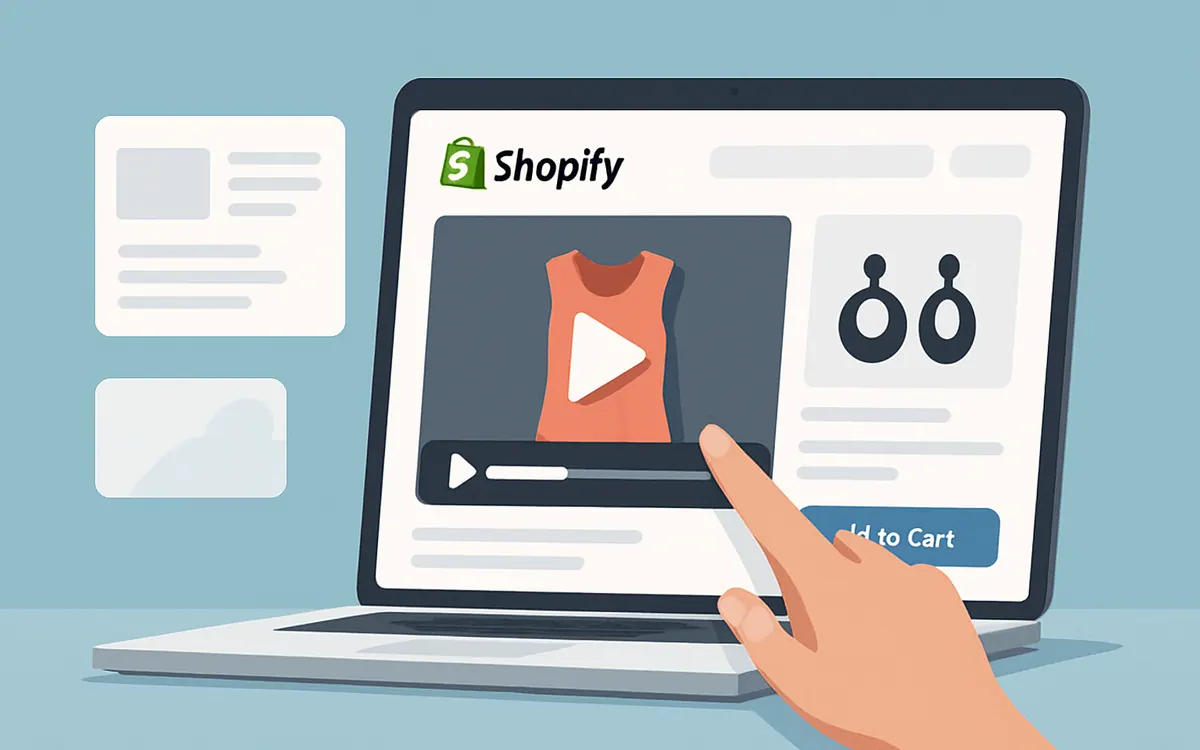
To use UGC videos on Shopify product pages, collect relevant customer or creator videos, obtain permission to use them, connect each video to the correct product, place the content near the buying decision, and measure whether it improves product clicks, add-to-cart actions, purchases, and gross profit.
The basic process is:
- Decide what customer objection the video should address.
- Source organic customer videos or commission paid UGC.
- Secure clear usage rights.
- Add any required sponsorship or incentive disclosure.
- Edit the video for the product-page context.
- Upload it as native media or add it through a shoppable-video app.
- Connect the correct product and variants.
- Place the video where it supports the purchase decision.
- Test it on mobile and desktop.
- Measure its effect against a baseline.
UGC is proof, not magic.
A weak video featuring the wrong product, unclear rights, or an irrelevant creator does not become persuasive merely because it looks informal.
Use UGC when it reduces uncertainty.
What Is a UGC Video?
A user-generated content video is content created by a customer or community member rather than the brand's internal production team.
Shopify includes customer reviews, photos, videos, social posts, and Q&A contributions within its definition of user-generated content.
Examples include:
- A customer unboxing an order
- A shopper showing how clothing fits
- A homeowner demonstrating a storage product
- A customer explaining how they use a skincare product
- A creator comparing two product variants
- A customer recording a before-and-after result
- A shopper showing a product inside their real home
UGC can be organic or paid.
Organic UGC
Organic UGC is created voluntarily by a customer without the brand commissioning the content.
Examples:
- A customer tags the brand in an Instagram Reel.
- A shopper posts an unboxing on TikTok.
- A customer sends a video through a review request.
- A customer shares a product demonstration in a community group.
Paid UGC
Paid UGC is commissioned from a creator who produces customer-style content for the brand.
The creator might not publish the video to their own audience. The brand may instead use the content on:
- Product pages
- Advertisements
- Landing pages
- Email campaigns
- Social channels
- Retail displays
Shopify distinguishes paid UGC creators from traditional influencers: paid UGC creators are often hired to produce the content itself, while influencer marketing generally relies on the creator distributing content to their existing audience.
UGC Video vs Influencer Video vs Brand Video
| Content type | Who creates it? | Main value | Main risk |
|---|---|---|---|
| Organic UGC | Existing customer | Real-world context | Unclear usage permission |
| Paid UGC | Commissioned creator | Scalable customer-style content | Can feel scripted or misleading |
| Influencer content | Creator with an audience | Content plus distribution | Higher fees and disclosure requirements |
| Brand video | Internal team or agency | Production and message control | Can feel less relatable |
Do not label paid creator content as an unsolicited customer review.
A creator can produce useful, authentic-looking content while still being compensated. The commercial relationship should not be hidden when disclosure is required.
Why UGC Videos Work on Product Pages
A product page has one primary job:
Help the shopper decide whether this product is right for them.
Brand photography usually shows the product under controlled conditions.
UGC can show:
- Real rooms
- Real bodies
- Real lighting
- Real packaging
- Real use cases
- Real product scale
- Real installation
- Real customer language
That can reduce four common forms of uncertainty:
- Outcome uncertainty: Will this product do what I need?
- Fit uncertainty: Will it fit my body, space, device, or routine?
- Effort uncertainty: Is it difficult to use, install, or maintain?
- Trust uncertainty: Does the product look credible outside a studio?
The useful question is not:
Does this video look authentic?
The useful question is:
What buying objection does this video remove?
Best Types of UGC for Shopify Product Pages
1. Product Demonstrations
A demonstration shows the product performing its primary function.
Examples:
- A cleaning product removing a stain
- A portable blender crushing ice
- A phone case protecting a dropped phone
- A vacuum collecting pet hair
- A storage organizer fitting inside a drawer
Use demonstrations when shoppers need to see the mechanism or result.
Recommended structure:
Problem → Product in use → Result → Shopping action
2. Unboxing Videos
An unboxing can show:
- Packaging
- Product size
- Included components
- Accessories
- Assembly requirements
- First-use experience
Use unboxing content when shoppers frequently ask:
- What comes in the box?
- Is it gift-ready?
- Is it larger or smaller than expected?
- Does it require setup?
3. Fit and Try-On Videos
Useful for:
- Clothing
- Footwear
- Jewelry
- Cosmetics
- Eyewear
- Accessories
Include relevant context:
- Creator height
- Size worn
- Usual size
- Selected product size
- Fit preference
- Product color
- Product dimensions
A try-on video without sizing context may look attractive but answer nothing.
4. Tutorials
Tutorials show how to achieve a result with the product.
Examples:
- Applying a skincare product
- Installing a replacement part
- Styling one jacket three ways
- Using a kitchen tool
- Assembling furniture
- Cleaning and maintaining an item
Use tutorials when perceived effort is blocking the purchase.
5. Comparison Videos
A comparison can explain:
- Small versus large
- Basic versus premium
- Matte versus glossy
- Road versus trail
- Warm versus cool shade
- One model versus another
Recommend the correct product for each use case.
Do not make every comparison end with the most expensive option.
Example:
Choose the 20-liter bag for daily commuting. Choose the 35-liter version for weekend travel.
That creates trust and makes the decision easier.
6. Before-and-After Videos
Before-and-after content can be useful for:
- Cleaning
- Organization
- Beauty
- Home improvement
- Furniture restoration
- Styling
Keep the comparison honest.
Do not materially change:
- Lighting
- Camera distance
- Camera angle
- Editing
- Product quantity
- Treatment time
- Environmental conditions
A dramatic transformation produced by editing rather than the product is not useful proof.
7. Objection-Handling Videos
Build videos around actual customer questions.
Examples:
- Is it waterproof?
- Does it work with an iPhone 16?
- Will it fit under an airline seat?
- Is the fabric transparent?
- Is assembly difficult?
- Does it have a strong smell?
- Can it be used on sensitive skin?
- Is it loud?
One objection per video is usually enough.
Step 1: Identify the Product-Page Constraint
Do not begin by collecting random customer videos.
First identify where shoppers hesitate.
Use:
- Customer-support tickets
- Product reviews
- Return reasons
- Pre-purchase chat questions
- Product-page recordings
- Search queries
- Sales-team feedback
- Social comments
Classify the main concern:
| Concern | Recommended UGC |
|---|---|
| Product does not look trustworthy | Real customer demonstration |
| Size is unclear | Fit or scale video |
| Setup looks difficult | Installation tutorial |
| Variant choice is confusing | Comparison video |
| Result seems exaggerated | Real-world before and after |
| Product looks different outside studio lighting | Customer lifestyle video |
| Package contents are unclear | Unboxing |
| Customer does not know how to use it | Tutorial |
Fix the largest meaningful objection first.
Do not publish ten generic testimonials when customers are abandoning the page because they cannot choose the correct size.
Step 2: Source UGC Videos
There are five practical sources.
Existing Social Mentions
Search for:
- Brand tags
- Product tags
- Hashtags
- Instagram mentions
- TikTok videos
- YouTube videos
- Community posts
Do not download and republish content without permission.
Publicly visible does not automatically mean commercially reusable.
Post-Purchase Requests
Ask customers after they have received and used the product.
A simple request:
How is your order working out? Send us a short video showing how you use it. With your permission, we may feature selected videos on our product pages and social channels.
Make the instructions specific:
- Show the product clearly.
- Film vertically.
- Use natural light.
- Explain what problem it solves.
- Keep the video under 30 seconds.
- Do not include private information.
- Do not use copyrighted music.
Review Requests
A review flow can request:
- Written feedback
- Photos
- Video
Do not require customers to express a positive opinion in exchange for an incentive.
In the United States, the FTC's Consumer Reviews and Testimonials Rule prohibits businesses from providing compensation or incentives conditioned—expressly or implicitly—on a review expressing a particular positive or negative sentiment.
A safer structure is:
Submit an honest video review and receive a $10 store credit. The credit is available whether your feedback is positive, neutral, or negative.
Local laws vary. Review your process with qualified legal counsel.
Paid UGC Creators
Commission paid creators when:
- The customer base is still small.
- A new product has little existing content.
- You need specific demographics or use cases.
- You need raw files and broad usage rights.
- You need several creative variations quickly.
Give the creator:
- Product name
- Intended audience
- One buying objection
- Required demonstration
- Claims they must avoid
- Required disclosure
- File format
- Aspect ratio
- Deadline
- Usage-rights terms
Do not over-script every sentence.
Over-scripted UGC often becomes a brand advertisement wearing casual clothing.
Giveaways or Customer Campaigns
You can invite customers to submit videos through:
- Product challenges
- Styling campaigns
- Recipe contests
- Transformation showcases
- Customer spotlights
Set clear terms covering:
- Eligibility
- Submission deadline
- Content requirements
- Judging
- Prizes
- Usage rights
- Disclosures
- Privacy
Do not use a vague social post as a substitute for proper campaign terms.
Collecting UGC videos from Shopify customers covers the request flows that reliably produce usable footage rather than one-off lucky clips.
Step 3: Secure Usage Rights
Permission to repost one social post is not necessarily permission to use the content:
- On a product page
- In paid advertising
- In email
- Indefinitely
- Internationally
- After editing
- Without attribution
Your permission agreement should address:
- Who owns the original content
- Which channels you may use
- Organic use
- Paid advertising
- Website and product-page use
- Email and SMS
- Geographic territory
- Length of usage
- Editing rights
- Creator attribution
- Raw-file delivery
- Compensation
- Withdrawal or termination terms
- Music and third-party rights
Simple Permission Request
Hi [Name], we loved your video featuring [Product]. May we repost and edit it for use on our Shopify store, product pages, organic social channels, and email marketing for 12 months? We will credit you as [Handle]. Please reply "I agree" if you own the content and approve these uses.
This is a practical starting script, not a substitute for a formal agreement where the content has meaningful commercial value.
Keep a Rights Log
Track:
| Field | Example |
|---|---|
| Creator | Jane Smith |
| Social handle | @janesmith |
| Video file | backpack-demo-01.mp4 |
| Product | Metro Travel Backpack |
| Permission date | July 14, 2026 |
| Allowed channels | Website, email, organic social |
| Paid ads allowed? | No |
| Territory | Worldwide |
| Expiration | July 14, 2027 |
| Attribution required? | Yes |
| Compensation | $150 |
Do not rely on old direct messages that nobody can find.
Step 4: Handle Disclosures and Testimonials Correctly
Permissions and disclosures solve different problems.
- Permission addresses whether you may use the content.
- Disclosure addresses whether viewers understand the creator's relationship with the brand.
In the United States, the FTC advises advertisers and endorsers to clearly disclose material connections, including payment, free products, employment, or other relationships that could affect how consumers evaluate an endorsement.
The FTC also prohibits fake or false reviews and testimonials, including testimonials that misrepresent whether the person exists or actually had the represented experience.
When Disclosure May Be Needed
Examples include:
- The creator was paid.
- The creator received the product for free.
- The creator received a discount.
- The creator is an employee.
- The creator has a family relationship with the owner.
- The creator earns affiliate commission.
- The creator was entered into a prize drawing.
Disclosure Examples
Depending on the facts and applicable law:
- Paid partnership
- Sponsored
- Ad
- Product gifted by [Brand]
- Creator received free product
- Affiliate partner
Make the disclosure difficult to miss.
Do not hide it:
- Behind a small information icon
- At the bottom of a long product page
- In low-contrast text
- Only inside the original social caption
- After the video has finished
- Inside a generic terms page
This article provides operational guidance, not legal advice. Requirements vary by country and situation.
Step 5: Score Each UGC Video
Use a simple 10-point score before publishing.
Give each category 0, 1, or 2 points:
| Criterion | 0 points | 1 point | 2 points |
|---|---|---|---|
| Product clarity | Product unclear | Product partly visible | Product obvious |
| Buying relevance | Entertainment only | Some useful context | Answers a buying question |
| Credibility | Misleading or vague | Acceptable | Specific and believable |
| Rights | Missing | Partial | Documented |
| Page fit | Unrelated | Broadly relevant | Exact product match |
Maximum score = 10
Starting rule:
- 8–10: Publish or test
- 6–7: Edit or request clarification
- 0–5: Reject
A video with one million social views but a score of four does not belong on the product page.
Step 6: Edit the UGC for Shopify
A social post and a product-page video operate in different contexts.
Remove:
- "Link in bio"
- "Follow for part two"
- "Comment for the link"
- Platform-specific stickers
- Expired discounts
- Long introductions
- Irrelevant trend setup
- Unlicensed music
- Products you no longer sell
Add where useful:
- Captions
- Product name
- Size or variant
- Creator context
- A clear CTA
- Required disclosure
- Product tag
- Short title
Recommended Structure
For a 20-second video:
- 0–3 seconds: Product or problem
- 4–12 seconds: Demonstration
- 13–17 seconds: Result or opinion
- 18–20 seconds: Product action
Do not force every video into this exact structure. Use it as a starting point.
Keep the Content Understandable Without Sound
Add:
- Captions
- Product labels
- Step numbers
- Visible results
- Short on-screen explanations
Many shoppers browse with their sound off.
Preserve the Creator's Meaning
Do not edit a neutral or mixed review into a falsely enthusiastic endorsement.
Do not:
- Remove important criticism
- Rearrange sentences to change meaning
- Add claims the creator did not make
- Present a paid creator as an independent customer
- Change the demonstrated conditions
Authenticity is not a visual style. It is accurate representation.
Step 7: Choose How to Add UGC to Shopify
There are three primary methods.
Method 1: Upload UGC as Native Product Media
Shopify lets merchants upload videos directly to a product's media gallery.
A product can contain up to 250 total images, videos, and 3D models. Shopify also supports YouTube and Vimeo product-media links, subject to its requirements and theme compatibility.
Basic Steps
- From Shopify admin, go to Products.
- Open the product.
- Find the Media section.
- Click Upload new.
- Select the approved UGC file.
- Reorder the media.
- Save the product.
- Preview the page.
Best for
- One video
- One product
- Standard playback
- No interactive product tags
- Simple demonstrations
- Unboxings
- Fit videos
Limitation
Native Shopify video does not automatically add interactive product tags or add-to-cart controls inside the video.
Method 2: Embed UGC in the Product Description
You can embed hosted video inside product descriptions through Shopify's rich text editor.
This works well for:
- Tutorials
- Installation guides
- Longer comparisons
- Customer stories
- Detailed routines
Use supporting text before and after the video.
Example:
See how the organizer fits inside a standard 60-centimeter kitchen drawer.
Then place the video.
After the video:
Measure the internal width and depth of your drawer before ordering.
The text gives the video a job.
Method 3: Use a Shoppable-Video App
A shoppable-video app can connect UGC directly to product actions.
Depending on the app, shoppers may be able to:
- Select a product tag
- Open product details
- Choose a variant
- Add the item to cart
- Browse several featured products
- Continue watching without leaving the page
Compatible app blocks can be added through Shopify's theme editor without directly modifying theme code, provided the relevant theme section supports app blocks.
Use this method when the video features:
- Several products
- An outfit
- A skincare routine
- A room setup
- A recipe
- A bundle
- A complete collection
Step 8: Place UGC Where It Supports the Decision
Inside the Product Gallery
Best for:
- Product demonstration
- Fit
- Unboxing
- Scale
- Product movement
Start by placing the UGC video after the first one or two strong product images.
Do not automatically make an informal customer video the main product image.
Near the Add-to-Cart Area
Best for:
- Sizing
- Compatibility
- Installation
- Final objection handling
- Short testimonials
Keep the video compact.
Do not push the price, variants, or add-to-cart button far below the fold.
Below the Product Details
Best for:
- UGC carousels
- Several customer examples
- Creator demonstrations
- Longer tutorials
- Comparison videos
This is often the best location for a three-to-six-video carousel because it adds proof without overwhelming the primary buying controls.
Near Reviews
Best for:
- Customer testimonials
- Real-world product use
- Video reviews
- Different customer profiles
Do not mix paid creator content with verified purchaser reviews without labeling the distinction.
Inside Frequently Asked Questions
Place a video beside the question it answers.
Example:
Is assembly difficult?
Show a 25-second customer installation video.
Product Page Placement Table
| UGC type | Recommended placement |
|---|---|
| Demonstration | Product gallery |
| Fit or sizing | Near variant selector |
| Short testimonial | Near purchase controls |
| Customer carousel | Below product details |
| Installation | Description or FAQ |
| Comparison | Below product information |
| Complete the look | Shoppable carousel |
| Routine | Shoppable carousel or tutorial section |
Step 9: Connect the Correct Products
For a shoppable UGC video, tag only products that are:
- Visible
- Discussed
- Available
- Relevant
- Correctly priced
- Published to the Online Store
For a multi-product video, display each tag when the product becomes relevant.
Example:
| Video time | Product | Action |
|---|---|---|
| 0–5 seconds | Cleanser | Show cleanser tag |
| 6–10 seconds | Serum | Show serum tag |
| 11–15 seconds | Moisturizer | Show moisturizer tag |
| 16–20 seconds | Full routine | Show all products |
Do not place six product cards over the opening frame.
Let the shopper understand the content first.
Check Variant Selection
Test:
- Size
- Color
- Material
- Pack size
- Subscription
- Bundle options
- Out-of-stock variants
Do not let the widget add an incorrect default variant merely because it reduces one click.
Removing effort is valuable only when the resulting choice is correct.
Step 10: Add UGC With Hyper Shoppable Videos
Hyper Shoppable Videos currently lets Shopify merchants turn product videos, TikToks, Reels, and UGC into interactive storefront widgets.
Its listed features include:
- Product tags
- Product hotspots
- Add-to-cart actions while watching
- Video carousels
- Mobile stories
- Embedded video widgets
- Homepage placement
- Product-page placement
- Collection-page placement
- Landing-page placement
- Video-view analytics
- Product-click analytics
- Add-to-cart analytics
Basic Workflow
- Install Hyper Shoppable Videos.
- Upload or import the approved UGC video.
- Select the featured Shopify product.
- Add a product tag or hotspot.
- Create a product-page widget.
- Open Online Store > Themes.
- Duplicate the live theme.
- Click Customize.
- Open the relevant product template.
- Add the Hyper app block.
- Select the widget.
- Position it on the page.
- Test mobile and desktop behavior.
- Publish the theme.
- Monitor views, clicks, and add-to-cart actions.
Features, limits, and interface labels can change. Review the current Shopify App Store listing and in-app instructions before publishing.
Step 11: Test the Full Customer Journey
Test more than playback.
Complete these actions:
- Open the product page.
- Start the video.
- Turn sound on and off.
- Read the captions.
- Select the tagged product.
- Choose a variant.
- Add the product to cart.
- Open the cart.
- Continue toward checkout.
- Return to the product page.
Repeat on:
- iPhone
- Android
- Desktop
- Mobile data
- Wi-Fi
- Multiple browsers
Also test:
- Sold-out variants
- Sale pricing
- Multiple currencies
- Different markets
- Subscription products
- Bundle products
- Sticky add-to-cart bars
- Chat widgets
- Cookie banners
Check whether the video overlaps:
- Variant selectors
- Chat controls
- Accessibility controls
- Cookie notices
- Sticky carts
- Navigation
- Product information
Step 12: Measure UGC Video Performance
Track the customer journey:
Product-page visit
→ UGC video view
→ Product click
→ Add to cart
→ Purchase
UGC Video View Rate
UGC video view rate =
Video views ÷ Product-page visits × 100
Example:
- Product-page visits: 10,000
- UGC video views: 2,500
2,500 ÷ 10,000 × 100 = 25%
Product Click-Through Rate
UGC product click rate =
Product clicks from video ÷ Video views × 100
Example:
- Video views: 2,500
- Product clicks: 250
250 ÷ 2,500 × 100 = 10%
UGC Add-to-Cart Rate
UGC add-to-cart rate =
Video-attributed carts ÷ Video views × 100
Example:
- Video views: 2,500
- Video-attributed carts: 100
100 ÷ 2,500 × 100 = 4%
Break-Even Orders
Include:
- App cost
- Creator fees
- Editing
- Usage rights
- Staff time
Formula:
Break-even orders =
Total monthly UGC cost ÷ Gross profit per order
Example:
- App cost: $49
- Creator cost: $300
- Editing cost: $150
- Staff cost: $100
- Total monthly cost: $599
Gross profit per resulting order: $30
$599 ÷ $30 = 19.97
The UGC system needs approximately 20 incremental monthly orders to cover those direct costs.
Do not use revenue in place of gross profit.
Test UGC Against a Baseline
A video-app dashboard can tell you what happened after a video interaction.
It does not automatically prove the video caused the purchase.
Use:
- A/B test
- Before-and-after comparison
- Similar-product comparison
- Holdout group
Example Test
- Version A: Product page without UGC
- Version B: Same product page with one UGC demonstration
Keep constant:
- Price
- Promotion
- Traffic source
- Product copy
- Images
- Shipping offer
- Test period
Compare:
- Add-to-cart rate
- Purchase rate
- Gross profit per visitor
- Return rate
- Average order value
Do not change five page elements and credit the entire difference to UGC.
Measuring shoppable video revenue sets out how to attribute orders to the video itself rather than to the session that happened to contain it.
Diagnose the Biggest Drop-Off
High page traffic, low video views
Possible causes:
- Weak thumbnail
- Video too far down
- Unclear play button
- Slow loading
- Irrelevant content
High views, low product clicks
Possible causes:
- Product is unclear
- Product tag is hidden
- CTA is weak
- Video is entertaining but not useful
- Wrong product is connected
High clicks, low carts
Possible causes:
- Price
- Variant confusion
- Product page
- Inventory
- Shipping
- Weak product fit
High carts, low purchases
Possible causes:
- Checkout friction
- Delivery time
- Payment options
- Unexpected costs
- Trust
Strong sales, weak profit
Possible causes:
- Creator fees
- Editing cost
- Low margin
- Discounts
- Refunds
- Returns
Fix the constraint.
Do not replace a strong video when shipping cost is the real problem.
Common UGC Video Mistakes
1. Publishing Without Permission
A tag or mention is not a complete commercial license.
Get written permission and document the allowed uses.
2. Hiding Paid Relationships
Paid, gifted, affiliate, employee, and family relationships may require disclosure.
Do not present commissioned content as spontaneous customer feedback.
3. Paying Only for Positive Reviews
Do not condition incentives on positive sentiment.
Ask for honest feedback regardless of whether it is positive, neutral, or negative.
4. Using Fake Customers
Do not fabricate customers, experiences, or testimonials.
Do not use an actor or AI-generated person while representing them as a genuine purchaser.
5. Choosing Videos by Social Views
Social engagement does not prove product-page relevance.
Choose videos based on the buying question they answer.
6. Adding Too Many Videos
Start with:
- One demonstration
- One proof video
- One objection-handling video
Expand only when each additional video answers a different question.
7. Replacing Product Information With UGC
UGC does not replace:
- Product title
- Price
- Variants
- Specifications
- Shipping
- Returns
- Instructions
- Accessibility
Not every shopper wants to watch a video.
8. Showing Unavailable Products
Check inventory before publishing.
When a product becomes unavailable:
- Hide the video
- Update the product tag
- Add a restock option
- Recommend an alternative
9. Leaving Social Calls to Action
Remove:
- Link in bio
- Follow for more
- Comment for the link
- Shop through TikTok
The shopper is already on your store.
10. Measuring Views Instead of Profit
Views measure attention.
Track:
Views → Clicks → Carts → Purchases → Gross profit
Frequently Asked Questions
What does UGC mean on Shopify?
UGC means user-generated content: customer-created reviews, photos, videos, social posts, and other content showing or discussing a product.
How do I add a customer video to a Shopify product page?
You can upload the approved video as native product media, embed it in the product description, or use a shoppable-video app to add product tags and cart actions.
Can I use a customer's TikTok on my Shopify store?
Only when you have the necessary permission. Confirm website use, editing rights, attribution, duration, geography, and any paid-ad rights separately.
Do I need permission to repost customer content?
Generally, you should obtain clear permission before using customer content commercially. Public availability or a brand tag does not automatically grant broad usage rights.
Do paid UGC creators need disclosure?
Material connections such as payment, free products, discounts, employment, or affiliate relationships may require clear disclosure under applicable law.
Can I offer a discount for a UGC review?
You can offer an incentive for honest feedback, but in the United States you should not condition the incentive on the customer expressing a particular positive or negative sentiment.
Where should UGC appear on a product page?
Product demonstrations work well in the media gallery. Sizing and objection-handling videos can appear near purchase controls. Customer carousels often fit below product details.
How many UGC videos should I add?
Start with one to three videos that answer different buying questions. Add more only when the additional content improves the decision.
Can a UGC video contain multiple products?
Yes. Use product tags or hotspots when the video shows an outfit, routine, room, bundle, or complete setup.
Can shoppers add products to cart from UGC videos?
Yes, when a compatible shoppable-video app provides product cards, variant selection, hotspots, or add-to-cart controls.
Does Shopify support native video uploads?
Yes. Shopify lets merchants upload product videos or add YouTube and Vimeo URLs, subject to plan, file, and theme requirements.
How do I measure UGC performance?
Track product-page visits, video views, product clicks, add-to-cart actions, purchases, gross profit, and the conversion rate between each step.
Do UGC videos automatically increase conversion?
No. Results depend on relevance, credibility, placement, product quality, traffic, offer, page experience, and measurement. Test against a baseline.
Can I edit a customer's video?
Only within the rights the creator granted. Do not edit the content in a way that changes the creator's meaning or creates a misleading claim.
Final Checklist
Before publishing UGC on a Shopify product page:
- Identify the buying objection.
- Select content that addresses it.
- Confirm the product is visible.
- Confirm the product is available.
- Obtain written usage permission.
- Document the allowed channels.
- Confirm editing rights.
- Confirm music and third-party rights.
- Add required disclosures.
- Do not condition incentives on positive sentiment.
- Remove platform-specific calls to action.
- Add captions.
- Connect the correct product.
- Check variant selection.
- Choose the correct page placement.
- Test mobile and desktop.
- Test add-to-cart behavior.
- Record a baseline.
- Measure carts, purchases, and gross profit.
- Remove content that does not improve the buying journey.
Use UGC to make the product easier to understand and trust.
Do not use it to manufacture trust that has not been earned.
Explore Hyper Shoppable Videos on the Shopify App Store.
Sources
- Shopify: What Is User-Generated Content? A Guide for Ecommerce Stores
- Federal Trade Commission: Consumer Reviews and Testimonials Rule—Questions and Answers
- Federal Trade Commission: Endorsements, Influencers, and Reviews
- Shopify Help Center: Adding Product Media
- Shopify Developer Documentation: App Blocks for Themes
- Hyper Shoppable Videos on the Shopify App Store