AI commerce should reduce uncertainty
The useful future of ecommerce AI is not a storefront covered in novelty. It is a shopping journey that understands a customer's goal, surfaces relevant products, answers practical questions, and makes the next action clear.
Hyper focuses on three connected moments: discovery, confidence, and action. Search and filters help shoppers find a relevant set of products. AI chat and FAQs help them understand fit, policy, and product details. Shoppable video helps them see products in context and move from interest to purchase.
Product discovery becomes more conversational
Shoppers increasingly express needs rather than exact catalog terms. Search experiences need to understand descriptive language while preserving precise handling for brands, SKUs, compatibility, and technical specifications. Semantic retrieval will work alongside structured filters and merchant-defined merchandising—not replace them.
The merchant must retain control. Teams need to understand why products appear, adjust rules, exclude inappropriate results, and measure whether discovery improves meaningful behavior.
Support moves closer to the buying decision
Customer questions are part of product discovery. Shipping, returns, sizing, materials, availability, and compatibility often determine whether a shopper buys. AI can answer approved repetitive questions immediately, but sensitive cases and exceptions should move cleanly to a person.
The winning workflow combines fast automation with visible sources, clear escalation, and accountable knowledge ownership.
Video becomes a navigable storefront surface
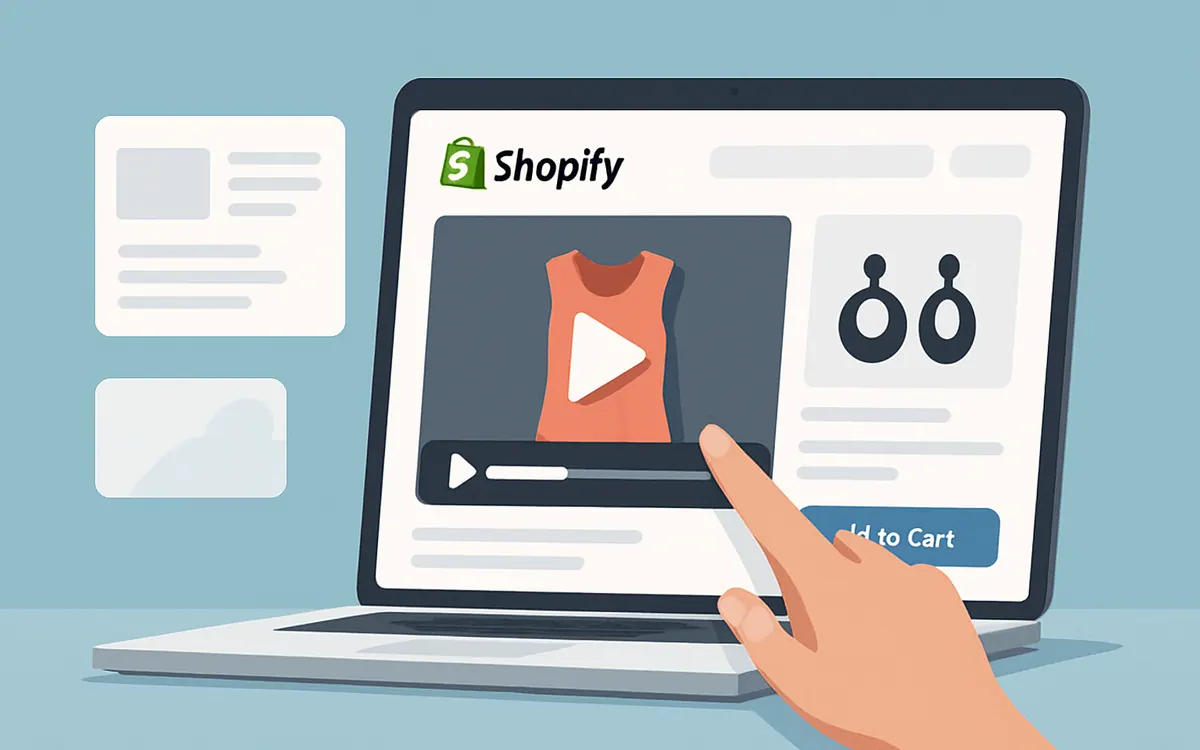
Product video is most useful when it connects inspiration with context and action. Interactive video can reveal featured items, variants, and purchase paths without forcing shoppers to search for what they just watched. The future is not autoplay everywhere; it is intentional placement, fast delivery, accessibility, and measurement.
Merchant control is non-negotiable
AI systems affect what customers see and what they are told. Merchants need controls for source content, ranking, branding, escalation, analytics, privacy, and rollback. Automation without governance simply moves operational risk into a less visible interface.
Progress should be measurable
Hyper's product direction is grounded in observable store outcomes: fewer unhelpful searches, faster answers, better product engagement, lower repetitive support demand, and clearer paths to purchase. Claims should be tested against store data rather than assumed from feature adoption.
The practical path forward
Merchants do not need to rebuild the entire storefront around AI. Start with one measured point of friction, establish a baseline, introduce a focused capability, and review both customer outcomes and failure cases. Expand when the evidence supports it.
Our vision is straightforward: AI should make Shopify stores easier to navigate, easier to understand, and easier to improve—while keeping merchants firmly in control.